
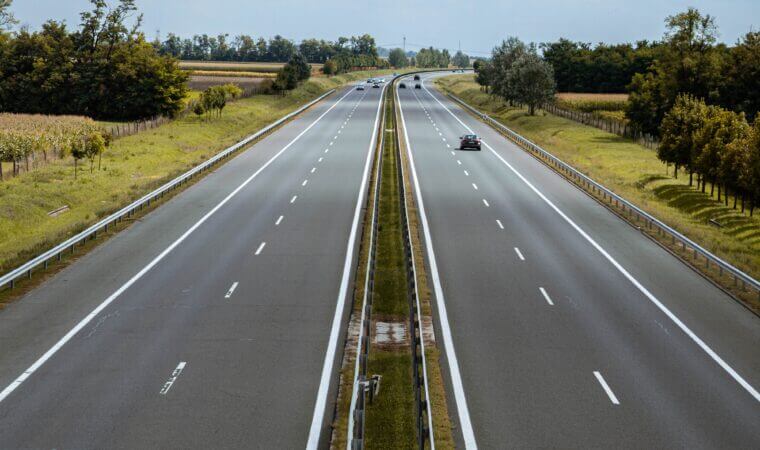
Passing on a two-lane road is one of the most ordinary things a driver does, and also one of the riskiest. On an undivided road there is no median and no extra lane. The only way around a slower car is to cross into the lane for oncoming traffic. Most of the time it works out. When it does not, the results can be severe, and the fallout does not stop at the crash scene. If you were the car in front, it may surprise you that the other driver’s insurer wants to talk about what you did. This post looks at the maneuver from the angle almost no one writes about: the overtaken driver.
Say an adjuster hints that you caused a wreck by not getting out of the way. It helps to know exactly what Maryland law asks of the overtaken driver. The answer is narrower than that phone call implies, and understanding it can protect your claim.
The scenario nobody explains: you get blamed for someone else’s pass
Picture a normal drive. You are moving straight ahead at the speed limit while passing on a two-lane road through a rural part of the state. A car comes up behind you, waits a moment, then pulls left into the oncoming lane to get around you. Then something goes wrong. Maybe an oncoming car crests a hill, maybe the other driver misjudges the gap, maybe the road curves. There is a collision.
Afterward, the calls begin. Instead of focusing on the driver who crossed into oncoming traffic, an adjuster asks about you. Why did you not slow down, brake, or pull onto the shoulder to help? The theory is subtle but deliberate. It suggests that you contributed to the crash by failing to make room. In Maryland, that suggestion is not harmless, because of how the state assigns fault. So it is worth knowing what the statute actually requires before you answer a single question.
What Md. Transp. § 21-303 says about passing on a two-lane road
Maryland’s overtaking and passing rules live in Md. Transp. § 21-303. Read as a whole, the statute puts most of the burden on the driver doing the passing, not the driver in front. Here is the core language, subsection by subsection.
First, the overtaking driver has to pass safely and leave space. Under § 21-303(b), “The driver of a vehicle overtaking another vehicle that is going in the same direction shall pass to the left of the overtaken vehicle at a safe distance.” The obligation to keep a safe distance falls on the person passing, not the person being passed.
Second, that driver cannot cut back in too soon. Under § 21-303(c), the overtaking driver, “until safely clear of the overtaken vehicle, may not drive any part of his vehicle directly in front of the overtaken vehicle.” Clipping back into the lane before fully clearing the other car is exactly the kind of move that triggers a sideswipe or forces someone off the road.
Now for the two duties that fall on you, the overtaken driver. Under § 21-303(e), “the driver of an overtaken vehicle, until completely passed by the overtaking vehicle, may not increase the speed of his vehicle.” And under § 21-303(d), “the driver of an overtaken vehicle, on audible signal, shall give way to the right in favor of the overtaking vehicle.”
Read them together and the balance is clear. The person passing carries the heavy obligations. The overtaken driver has only two, and both are narrow.
The overtaken driver’s two duties, and the ones they do not have
Start with what the statute does not say. Nowhere does § 21-303 tell you to brake, slow down, or pull onto the shoulder so another driver can complete a pass. There is no general duty to help someone overtake you. If you hold a steady, lawful speed and stay in your lane, you are doing what the law asks. That point matters, because the “you should have made room” argument assumes a duty that the statute simply does not create.
There is a flip side, though, and it is easy to miss. While passing on a two-lane road, the driver in front does not have to slow down, yet also may not speed up. Subsection (e) is explicit. Once someone begins to pass, you cannot increase your speed until they have completely cleared you. Accelerating to close the gap, whether out of pride or irritation, is not a gray area. It turns a lawful pass into a dangerous one, and it puts you on the wrong side of the statute. If evidence shows you sped up, that is a real problem for your side of the case.
So the honest picture is two-sided. You have no duty to actively assist a pass, yet you cannot sabotage one either. Between those two lines sits nearly everything an insurer might try to argue.
The honk rule: a leftover from the horn-to-pass era
The second duty, the one in subsection (d), surprises most people. On an “audible signal,” the overtaken driver must give way to the right. This provision is a holdover from an older era of driving, when a driver coming up from behind would tap the horn to announce a pass. The horn meant, in effect, I am coming around, please hold your line and ease right.
On a modern two-lane road, you cannot change lanes to the right, because there is no lane there. So in practice the duty means moving as far right within your own lane as you safely can when you hear that signal. It is a narrow, easily overlooked rule, and few drivers today think of a horn as a passing request. Even so, the language is still on the books, and an adjuster may point to it to argue that you failed to yield. Knowing the rule exists, and how limited it is, keeps that argument in perspective.
One more thing is worth saying plainly. None of this obligates you to leave your lane or drift onto a soft shoulder. You never have to make a sudden move that could cause its own crash. The duty is to ease right within your lane where it is safe, nothing more.
Why passing crashes on a two-lane road are so severe
The reason these wrecks tend to be so serious comes down to physics. In a pass gone wrong, two vehicles often meet front to front. The energy in that impact does not depend on one car’s speed. It depends on the closing speed, which is both cars’ speeds added together. Two vehicles traveling 55 miles per hour approach each other at a combined 110. That is a different order of magnitude than a rear-end tap in stop-and-go traffic.
That is why head-on collisions rank among the deadliest crash types on the road. According to the Federal Highway Administration, head-on collisions are the most harmful event in roughly 14 percent of all U.S. traffic fatalities each year. Federal safety programs built to prevent these crashes focus heavily on rural, two-lane, undivided roads, because that is where the danger concentrates. Those are the same roads where drivers most often need to pass.
None of this is driving advice, and it is not a suggestion about what you should have done in a given moment. It is context. It explains why a passing crash on a two-lane road so often produces broken bones, head injuries, and long recoveries. That also explains why the claim that follows tends to carry high stakes. When the potential damages are large, insurers have a strong incentive to find any thread of shared fault. That incentive points straight to the part of Maryland law that makes this angle so important.
Fault after a passing accident: how contributory negligence changes everything
Fault is where the overtaken driver angle really matters, and it is where Maryland law is unusually harsh. Maryland is one of a small handful of jurisdictions that still follow contributory negligence. Under that rule, if you bear even one percent of the fault for a crash, that finding can bar you from recovering anything at all. Most states moved to a comparative system long ago, where each side shares fault by percentage. Maryland kept the older, stricter doctrine, and it applies to car accident claims across the state.
Now the adjuster’s questions make sense. An insurer needs only a sliver of blame. It might come from the “you should have made room” theory, or from a claim that you sped up. Either way, the result is not just a smaller recovery. It can be no recovery at all. That is why a throwaway-sounding question is rarely casual. Under contributory negligence, a single admission can become a complete defense. You can read more about how the doctrine works in our overview of proving negligence in a Maryland car accident.
The same doctrine drives how Maryland courts decide right-of-way disputes in other settings too. For the broader picture, our post on the Maryland boulevard rule covers a related situation. There, one driver’s duty to yield can decide the entire case. The theme is consistent. In Maryland, small findings of fault carry outsized consequences.
What to do if you are blamed after being passed on a two-lane road
If you were passing on a two-lane road as the front car and an insurer is now circling, a few steady habits protect you. None of this is complicated, and all of it helps.
Be careful on the phone above all else. Do not accept a characterization of fault from an adjuster, and do not guess about what you could have done differently. A friendly question often exists to produce a quote the insurer can use later, so polite, factual, and brief is the right posture. It is completely fine to say you will follow up after speaking with a lawyer, and then end the call.
Preserve what actually happened. The police report, the vehicle positions, skid marks, and any independent witnesses tend to tell the real story. Usually that story is simple: the passing driver misjudged the maneuver. Photographs from the scene, if you were able to take them safely, can matter a great deal later. Keep your medical records and follow through on treatment, because gaps in care are another thing insurers use.
Finally, get advice before you give a recorded statement. Once you document the facts, the physics and the statute usually favor the driver who was simply proceeding in their own lane. A lawyer who handles these Maryland personal injury claims can deal with the insurer directly. Then you are not navigating a contributory negligence trap alone.
Talk to a Maryland car accident lawyer
If another driver passed you when the crash happened, you are not automatically at fault. It does not matter how the other side’s insurer frames it. The law places most of the passing burden on the driver who chose to overtake, and your two duties are narrow and specific. An insurer’s story is not the same as the statute.
At Gelb & Gelb, P.C., we help people injured in Maryland car accidents understand their rights and push back on unfair blame. If you have questions about a passing crash on a two-lane road, contact us for a free consultation. There is no cost to talk, and no obligation to hire us afterward.
This article is general information about Maryland law, not legal advice, and it does not create an attorney-client relationship. Every crash turns on its own facts, so speak with a lawyer about your specific situation before you act.