DC Personal Injury Lawyer
Reviewed & authored by Roger K. Gelb & Brian A. Gelb | DC Car Accident Attorneys, Gelb & Gelb, P.C.
Licensed in Maryland & Washington, D.C. | 70+ years experience | $400M+ recovered for clients Last updated: May 2026 | This page is reviewed quarterly to ensure legal accuracy.
Established in 1954 in the nation’s capital, our Washington, D.C., office marks the beginning of our history. Founding Partner Joseph Gelb, a Washington, D.C., personal injury attorney, led our firm for nearly 40 years, achieving national recognition for the personal injury cases he handled decades ago in Washington, D.C. His son, Roger Gelb, has been with the firm since 1991. He has continued to grow our practice in D.C., Maryland, and the surrounding area. Licensed to practice in multiple jurisdictions, our DC personal injury lawyers have handled thousands of cases, primarily in the region.
How Our DC Personal Injury Lawyers Evaluate a Case
Our DC injury lawyers are effective at handling an array of different injuries. Our analysis hinges on a few key factors.
- First, can we establish liability against the defendant?
- Does the liability component of your case survive any defenses?
- Is there insurance or some other source of recovery?
Before we can proceed, each of these questions must be answered affirmatively. We will examine these questions during your initial consultation and, of course, consider other nuances. Once we determine that your case meets these essential criteria, we will shift our focus to maximizing your recovery. Contact our knowledgeable lawyers for a free consultation for a comprehensive personal injury case evaluation in DC.
Finding the Best DC Personal Injury Lawyer
Choosing a Washington, DC personal injury lawyer means evaluating a firm on four practical measures. Specifically, those measures are trial experience, communication, results in similar cases, and reputation in client reviews. Most attorneys in the District understand injury law in general terms. As a result, the meaningful differences show up in how a firm handles clients day to day. The sections below explain what to look for and what questions to ask.
Trial Experience and Negotiation Skills
Trial experience and negotiation skills both matter in a DC personal injury claim. In short, insurers value cases differently when opposing counsel is willing and able to try the matter. Gelb & Gelb has tried personal injury cases in DC Superior Court and the United States District Court for the District of Columbia. The firm will recommend settlement when settlement reflects fair value, and recommend trial when it does not. Each recommendation is the client’s decision to accept or reject.
Communication and Responsiveness
Communication and responsiveness are the day-to-day measures of how a personal injury firm treats clients. At Gelb & Gelb, clients work directly with Roger K. Gelb or Brian A. Gelb on substantive case questions. As a result, clients receive legal updates from an attorney rather than from a paralegal, consistent with DC Rule of Professional Conduct 1.4. Phone and email response times for represented clients are typically same-business-day. Unlike many firms that delegate client communication to staff, direct access to your attorney is essential for quality representation. Throughout your case, you can expect immediate responses from Mr. Gelb. As one former client said, “[Mr. Gelb] kept me informed every step of the way.”
Proven Track Record of Success
A firm’s track record is the historical record of how it has handled cases similar to yours, not a promise about your case. Prior results do not guarantee a similar outcome, and every personal injury matter turns on its own facts. When evaluating a firm, several questions help. First, how many cases of your type has the firm handled? Second, who at the firm will be assigned to your case? Third, how does the firm staff trial work?
Client Reviews and Reputation
Client reviews are one input among several when evaluating a DC personal injury lawyer. At a larger firm, positive reviews of one attorney do not guarantee that the reviewed attorney will be the person handling your case. At Gelb & Gelb, case work is handled directly by Roger K. Gelb or Brian A. Gelb. The firm currently shows a 4.9 average on Google reviews; that number reflects past client feedback, not a prediction of any outcome.
Why Choose a Local DC Personal Injury Lawyer?
A local DC personal injury lawyer is an attorney admitted to practice in the District of Columbia. In short, that attorney regularly handles personal injury cases in DC courts and under DC substantive law. Local knowledge matters because DC follows pure contributory negligence, applies a separate vulnerable user rule under D.C. Code § 50-2204.52, and imposes a six-month written notice requirement on claims against the District under D.C. Code § 12-309. Gelb & Gelb’s attorneys are admitted in DC and Maryland. In addition, they litigate regularly in DC Superior Court and the United States District Court for the District of Columbia.
You should only hire a personal injury lawyer once you understand what a personal injury lawyer does. There are procedural steps you should be aware of, too. For example, if you are a Medicaid recipient, a personal injury recovery may destroy your eligibility to receive benefits. Balancing the amount you win at trial or in a settlement with becoming responsible for future medical expenses is a topic you should weigh carefully. A knowledgeable personal injury lawyer can break down the advantages and disadvantages of each choice. As a result, you are in the best position to make the right choice.
Personalized Attention for Every Client
Personalized attention means that the lawyer who signs the retainer is the lawyer who handles the case. At Gelb & Gelb, clients work directly with Roger K. Gelb or Brian A. Gelb rather than being routed through intake specialists for substantive case decisions. The firm answers phone calls 24 hours a day for new injury matters, with substantive legal work performed by the attorneys.
Experienced DC Personal Injury Lawyers
Experience in DC personal injury law means handling cases under the specific statutes and case law that govern claims in the District. For example, that includes the contributory negligence rule, the PIP election framework under D.C. Code § 31-2405, and the vulnerable user statute under D.C. Code § 50-2204.52. Gelb & Gelb’s attorneys have practiced personal injury law in the District for more than 70 years combined. Experience in this context affects case evaluation, negotiation posture, and trial preparation, not the outcome of any particular matter.
Proven Track Record of Success
A third benefit to having a Washington, DC, personal injury lawyer with experience is familiarity with the insurance companies. When you make a claim for negligence against a defendant, for example, there is a high probability you will be dealing with the defendant’s insurance provider. The defendant’s insurance company will provide legal counsel for the defendant, and communication will go through them. The defendant generally does not have sufficient assets to cover your loss anyway. So, the defendant must have insurance. However, insurance companies can be deceiving. They, too, have decades of experience handling these claims. And their goal is to pay you as little as possible for your injuries. This makes retaining an attorney with equal experience crucial.
$400,000,000+
Total Settlements Won
Common Defenses Against a DC Personal Injury Claim
A defendant in a DC personal injury case typically raises one of four legal defenses. Specifically, those defenses are contributory negligence, statute of limitations, pre-existing medical conditions, and sovereign immunity for government defendants. Each defense, if successful, can reduce or eliminate a plaintiff’s recovery. The subsections below explain how each defense works under DC law and what evidence tends to defeat it.
Contributory Negligence
Contributory negligence in DC is a complete bar to recovery. Specifically, if the defendant proves the injured person was even one percent at fault, the claim fails. However, a narrower rule under D.C. Code § 50-2204.52 applies to pedestrians and cyclists struck by motor vehicles. Because the threshold is so low, early development of liability evidence is often decisive. For example, scene photographs, witness statements, and police reports all matter.
Statute of Limitations
The general statute of limitations for personal injury claims in the District of Columbia is three years from the date of injury under D.C. Code § 12-301. However, shorter deadlines apply in two situations. First, wrongful death actions must be filed within two years under D.C. Code § 16-2702. Second, claims against the DC government require written notice within six months under D.C. Code § 12-309. Missing any of these deadlines typically ends the claim, regardless of its underlying merit. Also noteworthy is that a prudent DC personal injury lawyer will not represent you if it is too close to the deadline. It takes time to prepare a lawsuit. And if the lawsuit is rushed, the personal injury law firm may be liable for legal malpractice. Thus, many firms will avoid a case when it is only a few months before the deadline is met.
Pre-Existing Conditions and Medical History Challenges
A pre-existing medical condition does not automatically bar recovery in a DC personal injury case. Under DC law, an injured plaintiff may recover for the aggravation of a prior condition. Importantly, this is true even if the underlying condition existed before the incident. Proving aggravation requires comparing pre-incident and post-incident medical records and, in some cases, expert testimony.
Sovereign Immunity: Suing the Government in DC
Sovereign immunity is a doctrine that limits when and how a plaintiff can sue a government entity. Suing the District of Columbia government requires written notice to the Mayor within six months under D.C. Code § 12-309. Suing the federal government generally requires compliance with the Federal Tort Claims Act, including an administrative claim before suit. WMATA cases follow the WMATA Compact, which has its own immunity and procedural rules.
Why Choose Us as Your Personal Injury Lawyer in DC
The choice of a DC personal injury lawyer comes down to fit, resources, and access. In short, it is about the attorney who will actually handle the case. At Gelb & Gelb, the attorney listed on the retainer is the attorney who works the file, returns calls, and appears in court. The firm advances investigation and expert costs when warranted. In addition, those costs are recouped only from a recovery, consistent with DC Rule of Professional Conduct 1.5 and the firm’s written fee agreement.
Sometimes, the information you give your attorney decides whether you win the case. How quickly you deliver that information matters, and so does how quickly your attorney listens. We work to gather every relevant fact and build the strongest case possible. Our team also leaves no stone unturned when investigating your case. This is another benefit of having a legal team dedicating itself to your case. When necessary, we hire investigators, expert witnesses, or anyone else who may benefit your ultimate recovery.
Understanding Your Rights After a Personal Injury in DC
After a personal injury in DC, an injured person generally has the right to seek compensation from any at-fault party. However, that right is subject to the contributory negligence rule and the applicable statute of limitations. Those rights include economic damages such as medical bills and lost wages, non-economic damages such as pain and suffering, and in narrow cases punitive damages. The scope of recoverable damages depends on the facts of the case and the available insurance coverage. Our legal expertise spans all of Washington, D.C.’s communities, from Georgetown to Capitol Hill. We offer premier accident and injury legal representation. As a leading Georgetown personal injury lawyer and Dupont Circle injury attorney, our firm proudly represents clients in the city’s neighborhoods.
What Experience Do Our DC Personal Injury Lawyers Have With Your Case?
The relevant question is whether the firm has handled cases of your specific type, not just personal injury cases generally. Gelb & Gelb regularly handles DC car accidents, truck accidents, pedestrian and cyclist cases, premises liability, medical malpractice, and wrongful death matters. During the initial consultation, the firm will describe its experience with cases similar to yours so you can make an informed decision about representation.
Will You Personally Handle My Case?
Yes. At Gelb & Gelb, your case will be handled directly by Roger K. Gelb or Brian A. Gelb, the same attorneys who meet with you at the initial consultation. The firm does not assign substantive case work or trial appearances to non-attorney staff. This staffing model is consistent with DC Rules of Professional Conduct 5.3 and 5.5 on supervision and the unauthorized practice of law.
How Long Will Your Case Take?
The timeline of a DC personal injury case varies widely. For example, matters resolved through pre-suit negotiation may take several months, while matters filed in the DC Superior Court Civil Division can take a year or more. No lawyer can promise a specific timeline. After all, resolution depends on the severity of injuries, the duration of medical treatment, the position of the insurer, and the court’s calendar. The firm provides a realistic estimate after reviewing the medical records and the liability evidence. 
Suing Out-of-State Defendants: Your Rights in DC Personal Injury Cases
An out-of-state defendant can often be sued in DC. Specifically, this applies if the incident occurred in the District or if the defendant has sufficient contacts with the District to support personal jurisdiction. In some cases the plaintiff has a choice of forum between DC and a neighboring state. As a result, the choice can affect available damages, procedural rules, and the timeline. Because Gelb & Gelb’s attorneys are admitted in both DC and Maryland, the firm can evaluate the forum question. Specifically, the analysis turns on the facts of each case.
On the other hand, let’s say a resident of New York gets into an accident with you, a D.C. resident. You can sue the New York resident in a D.C. Superior Court. Serving process may be an issue, but we employ process servers who can handle this. Located near the White House, our downtown Washington, D.C., office is convenient for clients. In addition, we provide accident lawyer services in the heart of the city. There are excellent coffee options in Tatte Bakery, La Colombe Coffee, Compass Coffee, and others. Or, we can speak over the phone.
Process of Filing a Personal Injury Claim
Filing a personal injury claim in DC generally follows seven steps. First, the injured person seeks medical care and gathers evidence. Next, they consult an attorney and send a demand to the insurer. Finally, if negotiation fails, the firm files suit, conducts discovery, and resolves the case by settlement or trial. The exact path varies by several factors. Specifically, those factors include the type of claim, the identity of the defendant, and whether the District government or a federal entity is involved. The subsections below describe each stage.
Understanding Trial Processes for Personal Injury Claims in DC
Trial is the last stage of a DC personal injury case, not the most common one. The large majority of personal injury matters resolve before trial. For example, many resolve through pre-suit negotiation, while others settle after suit is filed but before a jury is empaneled. Trial becomes the right path in two situations. Specifically, that happens when the insurer refuses to offer fair value or when the legal or factual issues require a jury determination. The decision to try a case is the client’s, after the firm explains the risks and benefits.
If we file suit on your claim, there is no guarantee that you will go to trial. Sometimes, cases settle after we file suit but before trial commences. This is because there is a long time between filing suit and the commencement of trial. Accordingly, time can change a case. For example, if circumstances shift during the months of waiting, the defendant may make a more reasonable settlement offer.
Timeline
- Seek medical attention
- Gather evidence
- Consult an attorney
- File the claim
- Negotiate a settlement
- Trial (if necessary)
Advantages of Settling Your DC Personal Injury Case
Settlement of a DC personal injury case offers three practical advantages over trial. Specifically, those are faster access to compensation, lower costs, and a certain outcome. Settlement is not the right choice in every case. In particular, it may be wrong when the insurer’s best offer does not reflect the strength of the liability and damages evidence. The subsections below explain each advantage in more detail. A second alternative is arbitration. This involves either a neutral arbitrator or, less commonly, a panel of arbitrators. It is a less formal, faster version of the trial, but otherwise, it behaves in much the same way. We still go through opening and closing statements and present evidence. Arbitration can be either binding or non-binding.
Quicker Results
Settlement generally allows an injured person to access compensation months or years sooner than a trial verdict. Filing suit in DC Superior Court typically adds a year or more before a case reaches trial. Furthermore, additional time can pass before any judgment is paid. Settlement also avoids the appellate process, which can extend a trial outcome by another one to two years. When we file suit on a case, we must pay court fees. Our Washington, DC, personal injury lawyers will advance these fees for you. However, they come out of the ultimate recovery contingent on the success of your case. This means that if we fail, then you do not have to worry about these fees. But if we prevail in your case, you will ultimately be responsible for these costs.
Less Expensive
Trial increases the cost of a personal injury case. For example, those costs include court filing fees, deposition costs, expert witness fees, and other litigation expenses. Gelb & Gelb advances these costs and is reimbursed from the recovery, consistent with DC Rule of Professional Conduct 1.8(e). Settlement avoids most of these costs and increases the net recovery to the client.
Certainty of Outcome
Settlement provides a certain, agreed-upon recovery, while a jury verdict is inherently uncertain. Even a well-tried case can produce a verdict for the defense, or a damages award lower than the last settlement offer. Settlement also forecloses the risk of appeal, which is available from a trial judgment but not from a written settlement agreement. 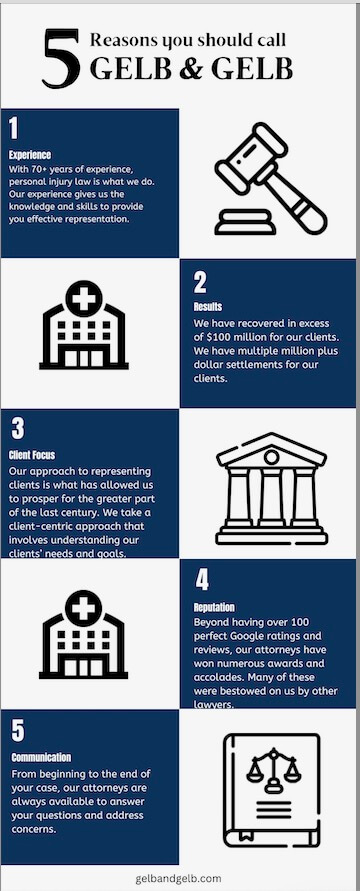
How Much Does a Washington, DC Personal Injury Lawyer Cost?
Gelb & Gelb handles DC personal injury cases on a contingency fee basis. As a result, the firm charges no hourly rate, no retainer, and no fee at all unless the client recovers compensation. The standard contingency fee is one-third of the recovery, which adjusts to forty percent if the case proceeds to trial. The fee, costs, and net recovery are set out in a written retainer agreement. Specifically, this agreement complies with DC Rule of Professional Conduct 1.5. We can also advance all costs for the client. However, contingent on our success, the client will eventually pay for these costs, like filing fees and expert witness costs.
Free Consultations
The initial consultation for a DC personal injury matter at Gelb & Gelb is free and creates no obligation to retain the firm. During the consultation, the firm reviews the facts, identifies the applicable deadlines, and explains the contingency fee. A consultation does not by itself create an attorney-client relationship; that relationship begins only when a written retainer agreement is signed.
Types of Personal Injury Cases We Handle
Gelb & Gelb handles the full range of DC personal injury matters. For example, those include car accidents, truck accidents, motorcycle accidents, pedestrian and bicycle accidents, slip and fall cases, premises liability, medical malpractice, and wrongful death. The firm evaluates each case for liability, available insurance coverage, the strength of the medical evidence, and the applicable deadlines. The subsections below describe the most common case types in more detail.
Car Accidents
Car accidents are the most common DC personal injury matter handled by Gelb & Gelb. A DC car accident claim turns on liability under the District’s contributory negligence rule, on the available insurance coverage including any personal injury protection election under D.C. Code § 31-2405, and on the medical record. The firm investigates each crash, requests police reports and available video, and works directly with treating providers to document injuries. If you are a Washington, DC, resident, the PIP statute is complex and may bar your right to recovery except for rare circumstances. We determine whether your case fits those circumstances. Due to the complexity of the DC PIP statute, other DC personal injury lawyers contact our office for guidance. In short, navigating this law requires care.
Slip and Fall Accidents
A slip and fall claim in DC requires specific proof. Specifically, the plaintiff must show the property owner either knew or should have known about a hazardous condition and failed to address it within a reasonable time. Common evidence includes surveillance video, prior incident reports for the same location, and testimony from staff or other patrons. Because DC applies pure contributory negligence, the plaintiff’s own conduct at the time of the fall is closely examined.
Medical Malpractice
A medical malpractice claim in DC requires two things. Specifically, the plaintiff must prove the provider departed from the accepted standard of care and that the departure caused injury. These cases generally require qualified medical experts to establish the standard of care and to connect the breach to the harm. Medical malpractice cases are document-intensive and expert-intensive, and Gelb & Gelb advances the costs of expert review and litigation, recovering them only from a recovery.
Truck Accidents
A truck accident claim in DC involves both ordinary negligence principles and federal regulations. Specifically, those rules govern interstate motor carriers and include hours-of-service rules and maintenance and inspection requirements found in the Federal Motor Carrier Safety Regulations. Liability may extend beyond the driver to the motor carrier, a maintenance contractor, or a freight broker. The firm preserves the truck’s electronic logs, maintenance records, and inspection history early in the investigation.
Pedestrian Accidents
A DC pedestrian who is struck by a motor vehicle is protected by D.C. Code § 50-2204.52, which replaces pure contributory negligence with a modified comparative rule for vulnerable users. Under that statute, a pedestrian or cyclist may recover unless his or her own negligence was greater than the combined negligence of all defendants. In practice, the firm handles pedestrian cases throughout the District, including incidents at marked crosswalks, unmarked intersections, and along high-traffic corridors.
Wrongful Death
A DC wrongful death claim is brought by the personal representative of the decedent’s estate under D.C. Code § 16-2701 and must be filed within two years of the date of death under § 16-2702. Typically, recoverable damages include loss of financial support, household services, and funeral expenses for the surviving next of kin. A separate survival action under D.C. Code § 12-101 allows the estate to recover for the decedent’s pre-death pain and economic losses. The firm commonly files both actions together. If you are injured by a third party’s negligence or intentional conduct, we may be able to help. Our cases extend beyond traditional car accidents; as seasoned DC accident lawyers, we also excel at representing victims of truck accidents, motorcycle accidents, and pedestrian incidents.
Other Categories Our Personal Injury Lawyers Handle
Gelb & Gelb handles a range of additional DC injury matters beyond the most common case types, including brain injury, spinal cord injury, burn injury, dog bite, amputation, and construction accident claims. In each matter, Roger K. Gelb or Brian A. Gelb personally evaluates liability, damages, and the available insurance.
Key Responsibilities of a Personal Injury Lawyer
A DC personal injury lawyer carries several core responsibilities. Specifically, those include investigating the incident, identifying liable parties, documenting damages, negotiating with insurers, filing suit when necessary, and trying the case if no fair settlement is offered. Each of these tasks is carried out under the duties of competence, diligence, and communication in DC Rules of Professional Conduct 1.1, 1.3, and 1.4. The list below describes the specific work performed at each stage. Below is a non-exhaustive list of things a personal injury lawyer does for you during your case.
How DC Personal Injury Cases Are Investigated and Built
A strong DC personal injury claim depends on evidence the firm preserves early, before video disappears and physical conditions change. Investigation begins as soon as the client retains the firm and continues through every stage of the case. The subsections below describe each component of that investigation.
Securing the Scene Evidence
Scene evidence in a DC personal injury case takes several forms. For example, it includes surveillance video from nearby businesses, traffic camera footage, photographs of vehicle damage and visible injuries, and a record of physical conditions such as skid marks, debris, and lighting. Most of this evidence has a short shelf life, with business surveillance commonly overwritten within days or weeks. The firm sends preservation letters early and obtains traffic camera data through public records where available.
Working with the Police Report
In a DC traffic case, the police report is a starting point for the liability analysis, not the final word. The Metropolitan Police Department report contains a narrative, a diagram, and any citations issued. However, it is not binding on the parties or the court. The firm reviews the report for accuracy. In addition, the firm compares it to the physical evidence and supplements it with witness statements and scene reconstruction when necessary.
Identifying All Potentially Liable Parties
Identifying every liable party in a DC injury case often increases the insurance coverage available for the claim. For example, a truck case may involve the driver, the motor carrier, a maintenance contractor, and a freight broker. In a premises case, the responsible parties may include the property owner, a property manager, and a cleaning vendor. Meanwhile, a rideshare case may bring in the driver, the platform’s contingent coverage, and a third-party motorist.
Building the Medical Record
In any DC personal injury case, the medical record forms the foundation of the damages claim. The firm helps clients collect records from emergency rooms, primary care physicians, specialists, and physical therapists. In addition, the firm works to ensure the records consistently describe the mechanism of injury. Gaps in treatment and inconsistencies between providers are common targets for insurer challenges.
Engaging Experts When Appropriate
Typically, experts in a DC personal injury case fall into four common categories. Specifically, those are accident reconstruction engineers, biomechanical experts, vocational rehabilitation experts, and life care planners. Each category supports a specific element of the claim, from liability to future damages. The firm advances expert costs and recoups them from any recovery, consistent with DC Rule of Professional Conduct 1.8(e).
Working with Insurance Adjusters in the District
In most DC personal injury claims, the parties reach a resolution through negotiation with an insurance adjuster before any lawsuit is filed. Insurers train adjusters to evaluate liability, minimize claim value, and close files quickly. Understanding how adjusters work, and what they can and cannot require from an injured person, helps explain why early representation matters.
The First Phone Call from an Adjuster
Importantly, the first call from a third-party insurer is not informational. Adjusters typically request a recorded statement. In effect, that request serves to identify any basis for a contributory negligence defense and to minimize the apparent severity of the injuries. There is no DC law requiring an injured person to provide a recorded statement to the other driver’s insurer.
Medical Authorizations and Records Releases
A broad medical authorization signed early in a claim can be risky. Specifically, it can give the insurer access to records unrelated to the incident, including prior conditions the insurer may use to argue the injuries are pre-existing. The firm releases only the records relevant to the claim, on its own timeline, after attorney review. Limiting the scope of the authorization protects the client’s privacy and the value of the claim.
Evaluating Settlement Offers
An initial settlement offer is rarely the insurer’s best number. The firm evaluates each offer against several factors. Specifically, those include the medical specials, the wage loss, the projected future treatment, the strength of the liability evidence, and the available policy limits. Ultimately, the decision to accept or reject any offer is the client’s, after the firm explains the risks and benefits.
When Litigation Becomes Necessary
Filing suit in the DC Superior Court Civil Division is sometimes the only way to obtain fair compensation in a personal injury case. Litigation opens formal discovery, depositions, and the credible possibility of a jury verdict. Many cases settle after suit is filed and the insurer reviews the developed record.
DC Personal Injury Cases by Location and Type
DC personal injury cases break down into five practical categories. Specifically, those are traffic and road user cases, pedestrian and cyclist cases, premises liability cases, transit and train cases, and wrongful death and catastrophic injury cases. Each category has its own legal framework, evidence patterns, and typical defendants. The subsections below describe each category.
Traffic and Road User Cases
Traffic cases in DC include car, truck, motorcycle, and rideshare crashes. As a result, they make up the largest category of personal injury matters in the District. The District reported 47 traffic fatalities in 2023 according to data described by the Washington Post, with serious injury crashes occurring regularly. The firm handles traffic cases involving DC residents, commuters, and out-of-state motorists who pass through the District.
Pedestrian and Cyclist Cases
DC pedestrians and cyclists are protected by the vulnerable user statute at D.C. Code § 50-2204.52, which replaces pure contributory negligence with a modified comparative rule for these claims. A pedestrian or cyclist struck by a motor vehicle may recover under the vulnerable user rule. Specifically, the claim fails only if the user’s own negligence was greater than the combined negligence of all defendants. The firm handles pedestrian and cyclist cases, including scooter and other micromobility incidents, across the District.
Premises Liability Cases
Premises liability in DC depends on the duty owed by the property owner or operator to the visitor. Specifically, that duty varies with the visitor’s status and the nature of the premises. Common case types include slip and fall, hotel injury, and nightclub injury claims, including incidents involving inadequate security and dangerous conditions. In every case, the firm investigates ownership, control, prior incidents, and inspection practices.
Transit and Train Cases
Transit and train cases in DC involve Metrorail, Metrobus, MARC, VRE, and Amtrak, each of which operates under its own legal framework. WMATA cases are governed by the WMATA Compact, which includes its own immunity and procedural rules and has been interpreted by DC, Maryland, and Virginia courts. In practice, the firm handles transit cases for both passengers and bystanders.
Wrongful Death and Catastrophic Injury Cases
A wrongful death or catastrophic injury case in DC is filed under D.C. Code § 16-2701 and § 16-2702 by the personal representative of the estate, with a two-year deadline from the date of death. These cases combine a wrongful death claim for the surviving family with a survival action for the decedent’s pre-death losses. The firm handles these matters with attention to both the legal and personal weight they carry.
Why Local DC Knowledge Matters in a Personal Injury Case
Local DC knowledge matters because DC law differs in material ways from Maryland and Virginia law. Specifically, those differences appear in negligence standards, damages rules, notice requirements, and procedural deadlines. A lawyer who handles cases primarily in DC works regularly with several rules. Specifically, those include the contributory negligence rule, the vulnerable user statute, the § 12-309 notice rule, and the local court culture. That familiarity shapes case strategy from the first call through trial. Local relationships also matter. The firm’s lawyers practice regularly in the DC Superior Court Civil Division and in federal court. The firm maintains professional relationships across the District. For example, those include relationships with medical providers, local accident reconstruction professionals, and mediators and arbitrators who handle DC personal injury matters.
Understanding DC Personal Injury Law
DC personal injury law is governed by a combination of statutes, including D.C. Code Title 12 on procedure and Title 16 on civil actions, and a body of case law that applies pure contributory negligence to most tort claims. Several features of DC law differ from neighboring jurisdictions. Specifically, those include the three-year statute of limitations, the six-month notice for claims against the District, and the vulnerable user rule for pedestrians and cyclists. The subsections below explain each of these features.
The Three-Year Statute of Limitations
Most DC personal injury claims must be filed within three years of the date of injury, under D.C. Code § 12-301. Wrongful death claims have a two-year deadline under D.C. Code § 16-2702. Claims against the DC government carry a stricter six-month notice requirement under D.C. Code § 12-309. Missing any of these deadlines typically ends the claim.
Pure Contributory Negligence
DC is one of a few United States jurisdictions that applies pure contributory negligence to most tort claims. Under this rule, a plaintiff found even one percent at fault for an accident can be barred from recovering damages. This rule places significant weight on the early liability record, including witness statements, scene photographs, and the police report. However, the vulnerable user exception under D.C. Code § 50-2204.52 partially relaxes this rule for pedestrians and cyclists.
The Vulnerable User Exception
The vulnerable user exception at D.C. Code § 50-2204.52 replaces pure contributory negligence with a modified comparative rule for pedestrians and cyclists struck by motor vehicles. Under the statute, a vulnerable user may recover unless his or her own negligence was greater than the combined negligence of all defendants. Since 2016, the rule has remained in effect and represents an important development in DC personal injury law.
Personal Injury Protection and Lawsuit Election
Personal injury protection in DC is a coverage option that pays medical bills and lost wages without regard to fault. However, electing PIP benefits restricts when the injured driver can also bring a tort claim against the at-fault driver. The PIP election must be made within 60 days of the accident under D.C. Code § 31-2405. As a result, reviewing the policy and the injury record before making the election can affect the outcome of the claim.
Damages Available in a DC Personal Injury Case
The damages available in a DC personal injury case fall into four categories: economic damages, non-economic damages, punitive damages, and wrongful death and survival damages. In each case, what a plaintiff can recover depends on the facts, the available insurance coverage, and the strength of the evidence. The subsections below describe each category.
Economic Damages
Economic damages in a DC personal injury case compensate for measurable financial losses. These losses include past and future medical expenses, lost wages, lost earning capacity, property damage, and out-of-pocket costs. Documentation drives the value of an economic damages claim. Bills, pay stubs, tax returns, and treating provider records form the foundation.
Non-Economic Damages
Non-economic damages in a DC personal injury case compensate for harms that cannot be measured in dollars. These harms include physical pain, emotional suffering, loss of enjoyment of life, and loss of consortium. DC does not impose a general statutory cap on non-economic damages in standard tort cases. The jury determines the appropriate amount on the evidence presented at trial.
Punitive Damages
Punitive damages in DC are available only in narrow circumstances. The plaintiff must prove punitive conduct by clear and convincing evidence. Specifically, the defendant must have acted with malice, evil motive, recklessness, or willful disregard for the rights of others. Most personal injury cases involve ordinary negligence and do not support punitive damages. When the facts support a punitive claim, the firm applies a separate evidentiary analysis.
Wrongful Death and Survival Damages
A DC personal injury that results in death gives rise to two potential claims. The first is a wrongful death claim under D.C. Code § 16-2701, which compensates the surviving next of kin for losses such as financial support and household services. The second is a survival action under D.C. Code § 12-101, which compensates the estate for the decedent’s pre-death pain and economic losses. The firm usually files both claims together when the facts support each one.
Filing a Claim Against the DC Government or WMATA
A claim against the DC government requires written notice to the Mayor within six months of the injury under D.C. Code § 12-309. In addition, the claimant must comply with the three-year statute of limitations under § 12-301. The notice must describe the time, place, cause, and circumstances of the injury. The WMATA Compact governs WMATA claims, which carry their own sovereign immunity and procedural rules. Missing the six-month notice is a common reason DC government claims are dismissed. The deadline runs even though the underlying three-year statute of limitations under § 12-301 has not yet expired. Anyone injured by a DC government vehicle, a fall on government-controlled property, or other public-sector negligence should consult counsel quickly to avoid losing the claim.
WMATA Claims
Claims against the Washington Metropolitan Area Transit Authority follow yet another framework. WMATA is a multi-jurisdictional compact entity with its own sovereign immunity rules, and DC, Maryland, and Virginia courts have all addressed when WMATA can be sued. For Metro and Metrobus injury cases, an attorney familiar with the WMATA Compact can evaluate which jurisdiction and which legal theory apply.
D.C.’s injury laws are unforgiving. The right lawyer, hired early, is the difference between a barred claim and a recovery.
Speak with a D.C. personal injury attorney at Gelb & Gelb. Free consultation, no fee unless we win.
Frequently Asked Questions About DC Personal Injury Claims
The questions below address points that come up most often in initial consultations. The answers describe general DC law and the firm’s standard practice. They are not legal advice for any specific case. For guidance about a particular situation, contact a DC personal injury lawyer for a free case evaluation.
What is the statute of limitations for a personal injury claim in Washington, DC?
Most personal injury claims in DC must be filed within three years of the date of the injury, under D.C. Code § 12-301. Wrongful death actions have a two-year deadline under D.C. Code § 16-2702. Claims against the DC government require a written six-month notice under D.C. Code § 12-309. Missing these deadlines typically bars recovery. Read more about the DC statute of limitations.
Is Washington, DC a no-fault state for car accidents?
The District uses a modified system. Drivers may elect personal injury protection benefits within 60 days of an accident under D.C. Code § 31-2405. A driver who elects PIP can still pursue a tort claim against an at-fault party. Specifically, the injury must meet statutory thresholds, such as substantial permanent scarring or significant medically demonstrable impairment. The right path depends on the policy and the injuries. Read more about the DC no-fault rules.
How does contributory negligence affect my DC personal injury claim?
Washington, DC follows pure contributory negligence in most tort cases. If a defendant proves that the injured person was even one percent at fault for the accident, the claim can be barred entirely. A 2016 statute, D.C. Code § 50-2204.52, softens this rule for pedestrians and cyclists in motor vehicle collisions. For most other claims, a clear liability record and witness evidence remain critical.
How much does it cost to hire a DC personal injury lawyer?
Gelb & Gelb, P.C. handles personal injury cases on a contingency fee basis. The initial consultation is free. The firm collects a fee only if the client recovers compensation. The standard fee is one-third of the recovery, which adjusts to forty percent if the case proceeds to trial. The fee, costs, and expense handling are set out in a written retainer agreement consistent with DC Rule of Professional Conduct 1.5. The firm can also advance case costs and recoup them from the recovery.
What types of compensation can I recover in a DC personal injury case?
An injured person in DC may seek economic damages such as medical bills, lost wages, and loss of earning capacity. Non-economic damages cover pain, suffering, and loss of enjoyment of life. Punitive damages are available only in narrow circumstances where the defendant acted with malice, recklessness, or willful disregard. Wrongful death and survival damages may apply when an injury results in death. Read more about recoverable damages.
How long does a DC personal injury case typically take?
Timing varies by complexity, injury severity, and the willingness of the insurer to negotiate. Some cases resolve through pre-suit negotiation in several months. Others require filing in the DC Superior Court Civil Division and can take a year or longer to reach resolution. The firm provides realistic timeline estimates after evaluating the medical records, the liability evidence, and the insurance coverage available.
Do I have to go to trial for my personal injury claim?
Most DC personal injury matters resolve through settlement rather than trial. A settlement is generally faster, less expensive, and provides a more certain outcome than a jury verdict. Trial remains the right path when an insurer refuses to offer fair value or when the facts present strong jury appeal. The choice is the client’s, made after the firm explains the options. Read more about the likelihood of trial.
What evidence do I need for a DC personal injury case?
The strongest cases are built on contemporaneous evidence. Helpful items include the police or incident report, photographs of the scene and injuries, names and contact information for witnesses, all medical records and bills, employer documentation of missed work, and any communication with insurers. Preserving evidence early matters because surveillance footage and physical conditions change quickly. Read more about evidence in a DC injury case.
What should I expect at a personal injury consultation?
The initial consultation is a confidential conversation about the facts of the incident, the injuries, and the available insurance coverage. The firm reviews the strengths and weaknesses of the claim, explains DC procedural rules including any applicable deadlines, and outlines the contingency fee arrangement. There is no obligation to retain the firm after the consultation. Read more about what to expect at the consultation.
Can I bring a personal injury claim if I was injured by the DC government?
Yes, but the rules are stricter. D.C. Code § 12-309 requires written notice to the Mayor of the District within six months of the injury, describing the time, place, cause, and circumstances. A Metropolitan Police Department report prepared in the regular course of duty can satisfy the notice requirement. Missing this deadline can end the claim before it begins, even though the underlying statute of limitations runs three years.
Additional Resources
Washington, D.C. Neighborhoods We Serve
Gelb & Gelb, P.C. represents personal injury clients throughout every quadrant of the District of Columbia. Our office at 1634 Eye Street NW, #350 sits in the Golden Triangle area of Northwest D.C., within walking distance of Farragut West Metro and a short drive from D.C. Superior Court. We routinely meet with clients across all eight Wards and handle accidents that occur on D.C. streets, federal property, Metro stations, and the surrounding interstates.
Northwest D.C. (NW)
We serve clients in Adams Morgan, Cleveland Park, Columbia Heights, Dupont Circle, Foggy Bottom, Friendship Heights, Georgetown, Glover Park, Logan Circle, Mount Pleasant, Petworth, Shaw, Tenleytown, U Street Corridor, Van Ness, West End, and Woodley Park. Many of our car accident cases arise on Connecticut Avenue NW, Massachusetts Avenue NW, Wisconsin Avenue NW, K Street NW, and the Whitehurst Freeway.
Northeast D.C. (NE)
Our injury attorneys handle cases throughout Brookland, Brentwood, Capitol Hill (NE side), Eckington, Fort Lincoln, H Street Corridor / Atlas District, Ivy City, Michigan Park, NoMa, Trinidad, and Woodridge. Common accident locations include Rhode Island Avenue NE, New York Avenue NE (Route 50), Bladensburg Road NE, and the area surrounding Union Station.
Southeast D.C. (SE)
We represent injury victims in Anacostia, Barry Farm, Capitol Hill (SE side), Capitol Riverfront / Navy Yard, Congress Heights, Deanwood, Fairlawn, Hillcrest, Marshall Heights, Penn Branch, and Washington Highlands. We handle accidents along Pennsylvania Avenue SE, Alabama Avenue SE, Martin Luther King Jr. Avenue SE, and the South Capitol Street corridor near Nationals Park.
Southwest D.C. (SW)
Our firm serves clients in Bellevue, Buzzard Point, The Wharf, and the Southwest Waterfront. SW is the smallest quadrant but includes high-traffic areas around L’Enfant Plaza, the 14th Street Bridge corridor, and I-395.
Surrounding Federal & Tourist Corridors
We also handle injuries that occur on the National Mall, around the U.S. Capitol grounds, the Tidal Basin, the Smithsonian museums, and other federal property within D.C. Claims involving federal property may trigger different legal procedures, including the Federal Tort Claims Act. In addition, our firm is admitted to practice in the United States District Court for the District of Columbia, where many of these cases are filed.
Washington, D.C. Courthouses Where We File Personal Injury Cases
Where your D.C. personal injury case is filed depends on the defendant, the type of claim, and the amount in controversy. Below are the courts where Gelb & Gelb, P.C. routinely litigates personal injury matters arising in the District of Columbia.
Superior Court of the District of Columbia (Civil Division)
Address: 500 Indiana Avenue NW, Washington, D.C. 20001 Jurisdiction: The trial court of general jurisdiction for the District of Columbia. The Civil Division hears most D.C. personal injury cases, including car accidents, slip-and-falls, premises liability, dog bites, and wrongful death claims against private defendants. Cases under $10,000 are filed in the Small Claims and Conciliation Branch; cases above that amount are filed in the Civil Actions Branch.
United States District Court for the District of Columbia
Address: E. Barrett Prettyman United States Courthouse, 333 Constitution Avenue NW, Washington, D.C. 20001 Jurisdiction: The federal trial court for the District. Personal injury cases land here when there is diversity jurisdiction (parties from different states with more than $75,000 at stake), when the United States is a defendant under the Federal Tort Claims Act (28 U.S.C. § 1346(b)), or when an injury occurs on federal property. Roger K. Gelb is admitted to practice before this court.
U.S. Court of Appeals for the District of Columbia Circuit
Address: E. Barrett Prettyman United States Courthouse, 333 Constitution Avenue NW, Washington, D.C. 20001 Jurisdiction: Hears appeals from the U.S. District Court for the District of Columbia in personal injury matters that originated in federal court. Roger K. Gelb is admitted to practice before this court.
District of Columbia Court of Appeals
Address: Historic Courthouse, 430 E Street NW, Washington, D.C. 20001 Jurisdiction: The highest court of the District of Columbia. Hears appeals from the Superior Court of the District of Columbia in personal injury cases that originated in D.C. Superior Court. There is no intermediate appellate court in the D.C. system, so an appeal from the Superior Court goes directly to the D.C. Court of Appeals.
Office of Administrative Hearings (D.C.)
Address: 441 4th Street NW, Suite 450 North, Washington, D.C. 20001 Jurisdiction: Handles administrative claims arising from injuries on D.C. government property where a contested hearing is required, separate from the D.C. Code § 12-309 written notice that must first be given to the Mayor or appropriate D.C. government official within six months of the injury.
About Us
Our DC law firm’s personal injury proficiency has grown significantly since 1954, making us the go-to attorneys for everything from slip and falls to auto accident cases in the Washington, D.C., area.
Related DC Personal Injury Pages
The pages below cover specific situations our DC personal injury attorneys handle. Each one goes deeper into the law and the practical steps that apply to that type of case.
Contact a DC Personal Injury Lawyer
We want you to know that you are in experienced and reliable hands from this point on. Contact our knowledgeable team for a free case evaluation on any personal injury claim in Washington, DC, from auto accidents to wrongful death cases.













 Free Consultation