

In simple terms, the rule gives drivers on a “favored” roadway, typically a main thoroughfare or boulevard, the legal right-of-way over vehicles entering from side streets, driveways, or unfavored roads. In Maryland car accident cases, courts uphold this rule, in no small part, because of how burdensome the contributory negligence defense is to a plaintiff seeking compensation in a personal injury trial. Meanwhile, if you violate the Boulevard Rule, you probably cannot make a claim under the contributory negligence defense. Thus, if you are entering a main road from a side road, you should always proceed with caution and should probably yield if the other road is favored while merging. This is why defense counsel often leans on the Boulevard Rule in arguing that you are at least partially to blame for the accident.
For drivers and accident victims, understanding how the Boulevard Rule works is essential to evaluating liability in your case. This is a rule that you may not have heard of. This is because the rule and the rule’s name are specific to Maryland. Although, there may be similar variations in other states. Imperatively, this rule may apply even if there are no traffic control signs, such as a stop sign or yield sign. Thus, it is critical to speak with an attorney in evaluating liability in your case, and not to say anything to the insurance companies regarding who is at fault. If you are unsure whether this rule applies in your case, call our office for a free consultation. We are happy to discuss the facts of your case and whether this rule is applicable.
The Importance of the Boulevard Rule
There are countless accident scenarios involving the Boulevard Rule. Some of which the plaintiff may recover, and some in which the plaintiff cannot. If you drive in Maryland, the rule is active just about every time you get behind the wheel. Thus, it is important to know when the rule applies to not only protect yourself, but also to know when you can pursue a viable personal injury claim. This is something that most personal injury firms in Maryland do not discuss with clients and they do not include on their sites. However, it is a simple and powerful rule that all Maryland drivers should be aware of. Unfortunately, many car accident lawyers in the state do not understand the rule as well as they should. This leads to lawyers telling accident victims they do not have a case when the Boulevard Rule actually entitles them to compensation.
Origins in Maryland Case Law
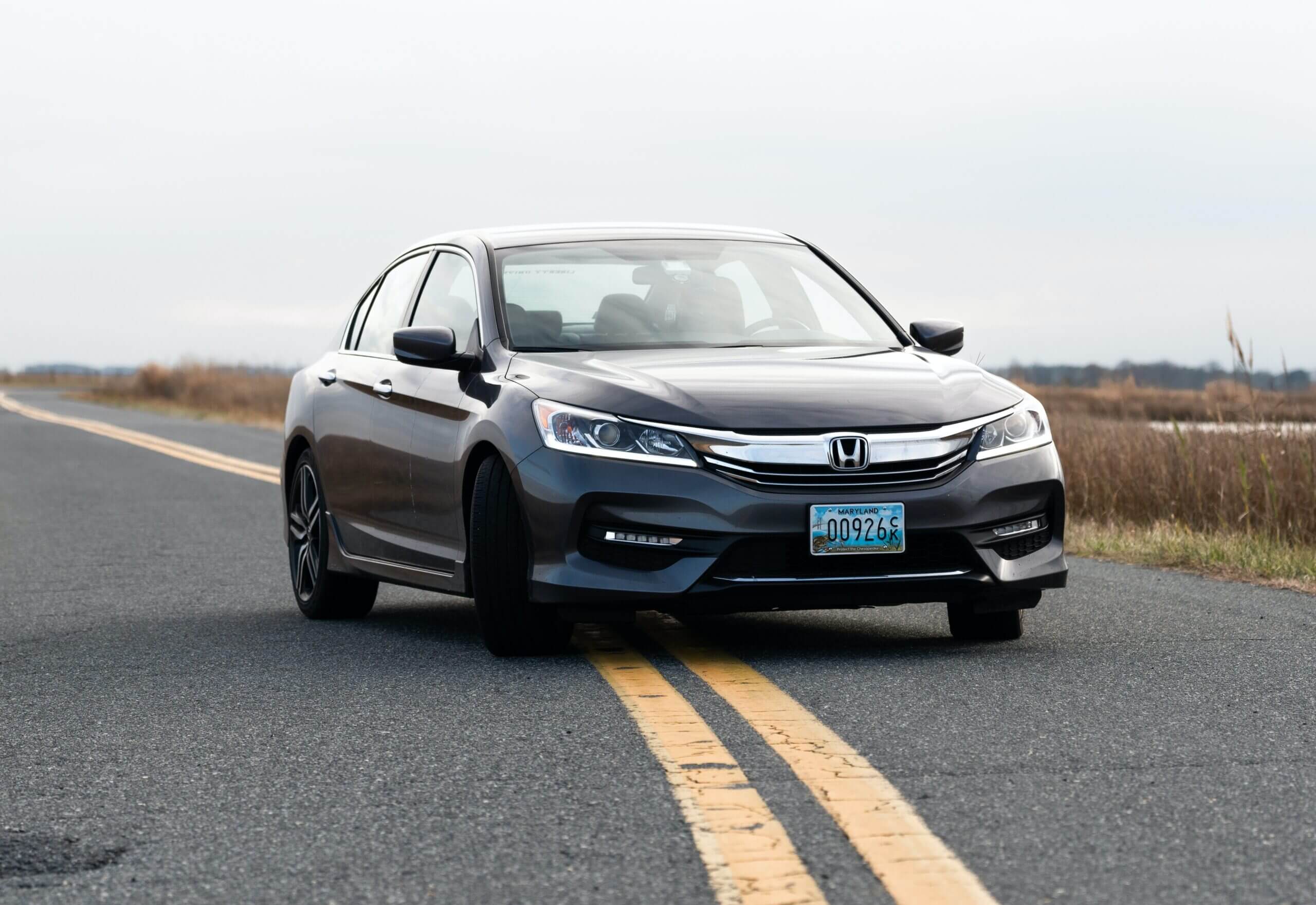
In Owens v. Creaser, 14 Md. App. 593 (1972), a school bus driver (Owens) attempted to turn left from an unfavored gravel road onto Goshen Road, a highway. Meanwhile, Creaser was driving his Cadillac down the road and hit the bus. The Court of Appeals, then the highest court in Maryland, ruled that unfavored drivers must stop and yield the right-of-way until it is safe, regardless of visibility limitations or the favored driver’s conduct. The rationale for this holding was policy-driven. Maryland traffic should continue to flow. It should not stop for roads with fewer drivers to join traffic. Otherwise, traffic will be slowed for everyone. Now, in Owens v. Creaser, the unfavored driver (Owens) was the plaintiff. Thus, the court only had to rule that the school bus driver was contributorily negligent for failing to yield to the favored driver. But what if Creaser was the plaintiff?
In Dean v. Redmiles, 280 Md. 137, 374 A.2d 329 (1977), the court considered whether favored drivers enjoy absolute immunity just because they are on that road. The short answer is no. The Boulevard Rule does not give favored drivers a free pass. A favored driver still has a legal duty to use reasonable care and may be held liable for negligence. In this case, Redmiles was speeding. Evidence of that is made clear by the 230 feet of skid marks he left behind. That is not to say that the driver in the unfavored lane could recover against Redmiles. Rather, a passenger in Redmiles’ car was able to recover against both drivers. Given that Dean v. Redmiles was a death case, the value of the case exceeded either party’s bodily injury policy limits.
Thus, it became necessary to make a claim under both policies, as each driver contributed to the accident.
Takeaways from the Case Law
There are at least three main takeaways from these two cases. Keep in mind that Maryland Court of Appeals decisions represent binding precedent in Maryland, as that was the highest Maryland court at the time of the decisions. The exception to this is if it is superseded by federal law.
- Strict enforcement of the Boulevard Rule (Owens v. Creaser): Unfavored drivers who enter a through highway are almost always barred from recovery, even when visibility is poor or the favored driver is arguably careless. This is a rule our attorneys have successfully argued in Maryland courts many times.
- Limits on the favored driver’s protection (Dean v. Redmiles): We know from Redmiles that a driver established on a favored road who collides with someone turning from an unfavored road is not immune to liability. That is not to say the driver on the unfavored road can recover against the favored driver due to contributory negligence, but we now know that a passenger can recover, as contributory negligence is not a factor.
- Policy balance: These cases find a balance between protecting the flow of traffic, but not totally excusing a negligent driver from liability when the plaintiff is not a driver coming from an unfavored road.
Statutory Basis for the Boulevard Rule
According to MD Transportation Code § 21-404.1 (2024), “the driver of a vehicle about to enter or cross any other part of a highway from a crossover, whether or not sign-posted, shall yield the right-of-way to any other vehicle approaching on that part of the highway.” This statute codifies via the legislature what the courts have already ruled in the above cases. The statute also addresses lesser-known rules. For example, under § 21-404, the driver of a vehicle about to enter or cross a paved highway from an unpaved highway shall stop. This is true regardless of whether there is a stop sign. In other words, this rule introduces the concept of a statutory stop sign, even if there is no stop sign visible. To take this example one step further, the driver coming from behind the statutory stop sign must then yield to drivers on the favored, paved road.
Favored vs. Unfavored Drivers
In Maryland, courts often frame right-of-way cases around the concepts of the favored and unfavored driver. The favored driver is the one who has the legal right-of-way, such as when traveling on a through highway or proceeding lawfully at an intersection. You can contrast this with an unfavored driver, who may be yielding, coming from behind a stop sign, or running a red light. In this situation, the unfavored driver must yield. If that driver fails to yield, it is exceedingly rare that they will be able to recover damages. Even if you are technically in the right through some exception, meeting your burden of proof by a preponderance of the evidence can be difficult. There will be almost no leeway given to you if you are in an unfavored lane.
Of course, if your car was stopped through no fault of your own, for example, you may be able to recover through an exception. However, if the other driver disputes your version of events, it can be challenging to win on liability.
Here, we list examples of when a driver is unfavored:
- A driver entering a main road from a private driveway or parking lot without yielding.
- A driver pulling onto a highway from a stop sign.
- A driver making a left turn across oncoming traffic at an intersection.
- A driver merging onto a highway without yielding.
- A driver proceeds through an intersection after ignoring a yield sign.
- A driver entering the roadway from a shoulder or emergency lane without waiting for a safe gap.
- A driver attempting to “beat the light” by entering on a yellow light, but does not clear in time and is hit.
Common Accident Scenarios Involving the Boulevard Rule
Understanding how courts apply the rule to common accident scenarios can help you better understand the rule and highlight the risks you face when failing to yield to a driver on a favored road. Perhaps the most common scenario is when a driver is entering the main road from behind a stop sign. Of course, the driver coming from behind the stop sign must yield to all traffic. There is almost no scenario where a driver from behind a stop sign can recover against another party. This is due, in no small part, to the Boulevard Rule. A second common scenario is when a driver is merging from a side street or alley. This is a clear-cut example of a “favored” road and an “unfavored” road. When this happens, a court will always give more deference to the driver on the main road.
A third common scenario involving this rule is on the highway. Imagine a driver attempting to merge onto I-495 from an on-ramp. The highway traffic already traveling at 65 miles per hour is the “favored” traffic under the Boulevard Rule, while the merging vehicle is the “unfavored” driver. If the merging driver forces their way onto the highway and collides with a vehicle already traveling in the main lanes, the courts will almost always assign more fault to the unfavored driver. Of course, that is not to say that the favored driver will share no responsibility. These cases must be evaluated individually as the property damage to the vehicle can tell as much about how the accident happened as anything else. In higher value cases, we will retain an accident reconstructionist to draw up a report and testify at trial if liability is in question.
Limited Exceptions Recognized by Courts
The last clear chance doctrine, also known as the humanitarian doctrine, allows a plaintiff to recover, despite being contributorily negligent, if the defendant had a last clear chance to avoid the collision and failed to do so. As an example, imagine that your car breaks down, through no fault of your own, while merging onto a main road from a side road. In this instance, you may be in helpless peril. This is a phrase of art. Helpless peril exists when you, through your own contributory negligence, put yourself in a position of peril, like extending into the roadway, from which you cannot extricate yourself. In this instance, the defendant who hits you is liable if they either knew or should have known of your predicament.
But for this exception to work and enable you to recover despite being contributorily negligent under the Boulevard Rule, the defendant must have been able to avoid colliding with your vehicle at the time of the accident. In other words, the defendant must have had a last clear chance to avoid hitting you. A clear example of this is if you had been sitting idle in that position, and the defendant driver either saw you while driving down the road or should have seen you. This is made clear in Shriner v. Mullhausen, 210 Md. 104 (1956). As the judge said in that case, while the Boulevard Rule assigns superior rights to the favored driver, those rights are not limitless.
Misconceptions About the Boulevard Rule
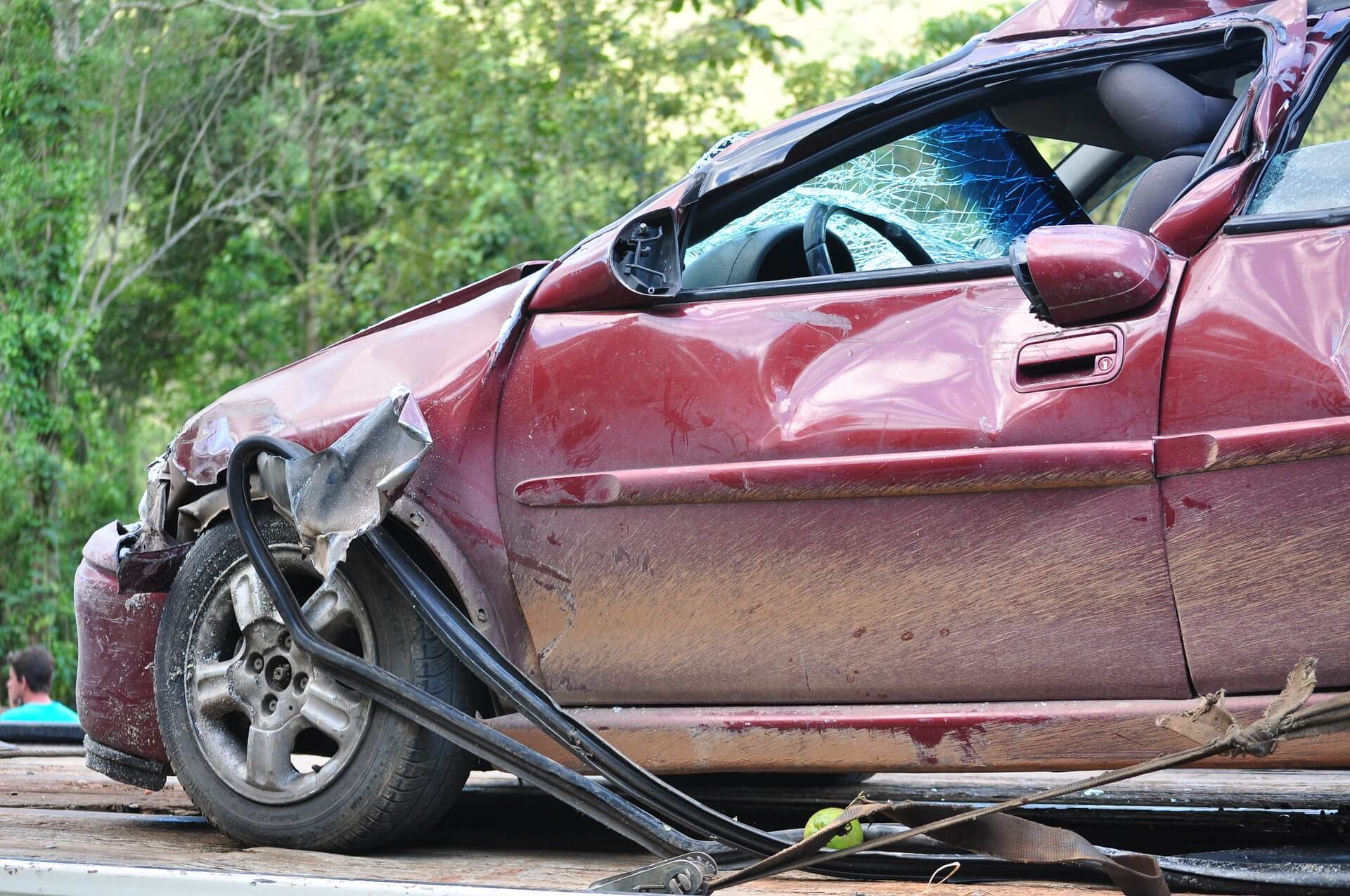
As with any concept new to a reader, it is understandable that there are some misconceptions. When we speak to clients about the Boulevard Rule pretrial, we have noticed a few common misconceptions. We address and clear up those misconceptions here.
The Boulevard Rule Automatically Increases Claim Value
The Boulevard Rule does not increase the value of your case per se. In theory, if we are successful on liability at trial, then the Boulevard Rule is taken out of the equation, and the judge or jury should focus just on your medical records, other economic damages, and your pain and suffering. However, liability and the Boulevard Rule can become factors when negotiating a settlement. For example, if we know that our liability argument is a 50/50, should we go to trial, then, we may be willing to hedge our bets. In other words, if your case is worth $30,000, but liability could be lost outright, you may get $30,000, or you may get $0 should we go to trial.
If both sides understand this, then we may come to a negotiated settlement somewhere between the two potential outcomes. The Boulevard Rule shores this calculus up. If the rule applies, it can strengthen our position in negotiation. But of course, we still depend on the strength of your testimony and other pertinent factors that would exist at trial should the negotiation be unsuccessful.
Unfavored Drivers Can Never Recover
As we now know from the exceptions section, an unfavored driver can still recover in limited circumstances. However, it is extremely difficult and unlikely, unless there is a very specific set of facts and the evidence to prove it. Nonetheless, this is a misconception, and one a Maryland attorney would be wise to consider.
The Rule Only Applies at Busy Intersections
As we now know from the Maryland Code, the Boulevard Rule does not just apply at busy intersections. Instead, it applies at least when there is a paved highway and an unpaved highway. Under the code, a paved highway is “a highway that has a hard, smooth surface of gravel, shells, crushed stone, paving blocks, asphalt, concrete, or other similar substance.”
Police Reports Always Control Boulevard Rule Cases
It is a misconception we encounter daily as car accident attorneys. In reality, police reports almost never control Boulevard Rule cases, nor do they control any car accident case. Often, a client will call us and insist that the police report says they did not cause the accident. But a judge does not give much or any credence to this information, as it is hearsay. Instead, the court prefers testimony from someone who actually witnessed the accident. As the police officer likely did not witness the accident, but instead wrote in their report what they heard at the scene, the best evidence rule tends to exclude a police report from court.
Impact of the Rule on Insurance Claims and Settlements
The rule is rooted in decades of Maryland caselaw. While laypeople and even some lawyers do not fully grasp the Boulevard Rule, it applies in many trials throughout Maryland. Accordingly, it must be a consideration when settling an insurance claim. Whether you are seeking a settlement or an uninsured motorist claim through your own insurer, the Boulevard Rule comes into play. A prudent attorney, and even a pro se claimant, may decide to leverage the Boulevard Rule in a settlement negotiation. On the other hand, the adverse insurer may use the Boulevard Rule against you. For example, if you are the unfavored driver entering a highway or turning from a side road, insurers will almost always deny liability on your claim by invoking the Boulevard Rule.
In which case, you now know there are exceptions that may be available to you, with help from an experienced attorney. But advocating for your side and fending off the Boulevard Rule when it is used against you as a defense is not simple. While the law may have a clear carve-out, effectively and convincingly laying out those facts is critical. On the other hand, if you are in the favored lane, you can leverage this rule to win on liability. However, this rule does not necessarily increase the value of your case. The value of your case depends on your medical bills, lost wages, and the amount of pain and suffering you experienced. But it is worth noting that both parties do consider how compelling your case is during a settlement negotiation.
If your case is weak on liability, you may be wise to accept a lower offer. On the other hand, if this rule makes your case bulletproof, you have the upper hand when you demand the full amount.
If you have been injured in a car accident in Maryland, our experienced Car accident lawyer and Personal injury lawyer are available for a free consultation.