
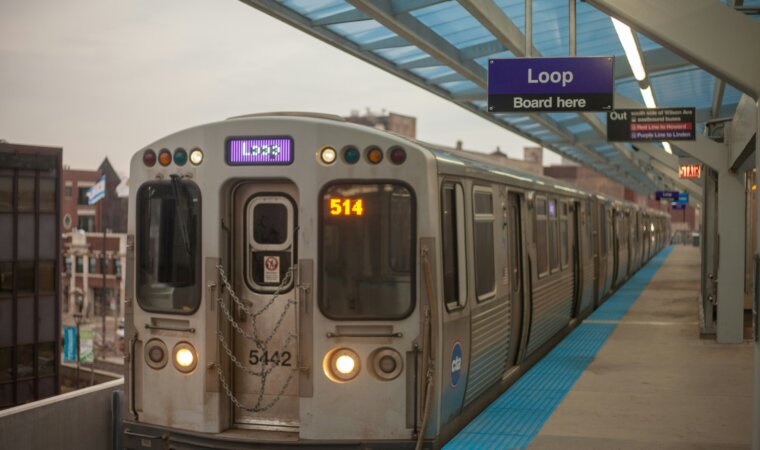
The Purple Line is Maryland’s most expensive and most delayed infrastructure project in a generation. The 16.2-mile light rail line connecting Bethesda to New Carrollton originally carried a budget of $5.6 billion and a scheduled opening of March 2022. As of early 2026, Purple Line construction is 87% complete, the total cost has ballooned to approximately $9.8 billion, and the line will not carry passengers until late December 2027, more than five years behind the original schedule.
For the residents of Montgomery and Prince George’s Counties who have lived alongside years of torn-up streets, blocked sidewalks, diverted bike trails, and rerouted traffic, the Purple Line is a long-running disruption. For a personal injury attorney practicing in Maryland, it also represents a sustained period of elevated risk, with documented Purple Line construction injuries already occurring and more likely as work continues through the end of 2027.
This post examines the project’s financial history, the specific hazards that Purple Line construction has created for pedestrians, cyclists, and drivers along the corridor, and the legal framework for pursuing injury claims against Maryland government entities.
A $9.8 Billion Purple Line Construction Budget
The Purple Line construction cost history is well documented. A March 2025 report by the Maryland Comptroller’s office found the total project budget, including construction and 30 years of operations, had reached approximately $9.8 billion, nearly $4.2 billion over the original 2016 estimate. Construction costs alone rose from a projected $2 billion to $3.4 billion after the original contractor walked off the job in 2020, citing $800 million in overruns. Maryland settled with that contractor for $250 million and then hired a new general contractor, Maryland Transit Solutions, under a revised $2.3 billion construction contract signed in 2022.
Governor Wes Moore, approving yet another funding increase in March 2024, said his administration was “still cleaning up this mess from years of mismanagement,” according to Maryland Matters. The Comptroller’s report also found that permitting and legal fees, originally budgeted at $6 million, had consumed approximately $800 million by 2025. As a result, the opening date, once March 2022, now targets late December 2027, though internal financial documents reviewed by 7News indicated a possible slip to January 2028.
The table below summarizes the key figures:
| Category | Figure | Source |
|---|---|---|
| Original budget (2016) | $5.6 billion | Maryland MTA |
| Original projected opening | March 2022 | Maryland MTA |
| Revised total cost (build + 30-yr operations) | ~$9.8 billion | Maryland Comptroller, March 2025 |
| Construction cost alone | $3.4 billion | Maryland MTA / Board of Public Works |
| Cost overrun on construction | $1.46 billion | Maryland MTA |
| Years behind schedule | 5+ years | ABC7 / 7News (Jan. 2026) |
| Current projected opening | Late December 2027 | Maryland MTA (Jan. 2026) |
| Total light rail vehicles | 28 (delivered Nov. 2025) | WTOP / Maryland MTA |
| Length of line | 16.2 miles, 21 stations | Maryland MTA |
| Counties served | Montgomery and Prince George’s | Maryland MTA |
| Key connection points | Bethesda, Silver Spring, College Park, New Carrollton | Maryland MTA |
Where Things Stand Today
As of November 2025, all 28 light rail vehicles have arrived and crews are now testing them on the line. WTOP reported that track installation in Prince George’s County is complete, with more than 148,000 feet of the total 193,100 feet of track laid system-wide. Testing has expanded to new areas, including College Park. Meanwhile, active construction continues in Silver Spring and Bethesda, with multiple road closures, sidewalk detours, and lane reductions still in effect.
Purple Line Construction Hazards Along the Corridor
The Purple Line construction corridor runs through some of the most densely populated areas of suburban Maryland. Silver Spring, Langley Park, College Park, and Bethesda are all high-pedestrian environments. Years of active construction through these communities have produced conditions that are directly hazardous to people on foot, on bikes, and in vehicles. The injuries are not hypothetical.
Reporting by Archyde documented falls among senior residents near the Silver Spring construction zone. One resident suffered a dislocated shoulder and torn rotator cuff after a fall on disrupted pavement near The Bonifant senior living facility. Residents along Wayne Avenue reported narrowed sidewalks and inadequate lighting as contributing factors. Similarly, WUSA9 reported that drivers, pedestrians, and business owners in Prince George’s County complained that construction had snarled traffic and caused accidents along University Boulevard.
The specific categories of hazard are consistent across the corridor:
Uneven and disrupted pavement. Active construction zones leave pavement in a constant state of partial reconstruction. Temporary surfaces, exposed utilities, inconsistent grades, and metal road plates are standard features of any large rail build. Each creates tripping and falling hazards, particularly at night and in wet weather.
Rail track gaps for cyclists. The Purple Line runs in mixed traffic for significant portions of its alignment, meaning cyclists share the roadway with embedded tracks. University of Maryland officials issued safety guidance explicitly warning that cyclists must cross Purple Line tracks at a 90-degree angle. Crossing at a lower angle or riding parallel to the tracks can result in wheels becoming stuck in the rail gap. This is the same hazard that has produced serious injury litigation in Seattle and Portland involving streetcar and light rail systems.
Additional Corridor Hazards
Forced pedestrian detours. The Purple Line’s own construction updates page lists numerous active pedestrian detours, including closures in Bethesda, Silver Spring, and along the University of Maryland campus. These detours force pedestrians onto unfamiliar routes, often shared with construction traffic. Furthermore, they frequently change without sufficient notice to residents who rely on them daily.
Work zone vehicle accidents. Maryland DOT estimates that more than 2,000 traffic accidents occur in or around work zones in the state every year. Merging lanes, flagging operations, temporary signal configurations, and reduced sight lines all increase collision risk for drivers and anyone else sharing the road with construction traffic.
Purple Line Construction Injury Claims: The Rules Are Different
If you suffer an injury due to Purple Line construction activity, defective road conditions, or the negligence of a state or local government entity in Maryland, the legal process differs significantly from filing a standard personal injury claim against a private party. There are notice requirements that, if missed, will bar your claim entirely.
Claims Against the Maryland Transit Administration
The Maryland Transit Administration, a state agency, administers the Purple Line. Claims against the MTA fall under the MTA Tort Claims Act, Maryland Code Transportation Section 7-702. Under this statute, you must submit a written claim letter to the MTA within one year of the date of your injury. The claim must identify the parties, describe how, where, and when the injury occurred, and include a demand for damages. Notably, unlike the general Maryland Tort Claims Act, the MTA Tort Claims Act sets no monetary cap on recovery, which is a significant distinction.
Claims Against the State of Maryland
For injuries that state employees or agencies other than the MTA cause, the Maryland Tort Claims Act, State Government Article Sections 12-101 through 12-110 governs the process. You must submit a written claim to the Maryland State Treasurer within one year of the injury. Recovery caps at $400,000 per claimant. Maryland courts have largely declined to recognize good-cause exceptions to this deadline. Being a few days late has proven insufficient for relief.
Claims Against Montgomery or Prince George’s County
For injuries that county employees cause or that occur on county-maintained roads and sidewalks, the Maryland Local Government Tort Claims Act, Courts and Judicial Proceedings Section 5-304 applies. The notice requirement is again one year, with written notice delivered to the applicable local government. Recovery caps at $400,000 per person and $800,000 per incident. In practice, determining which entity, state or county, bears responsibility for a particular stretch of road or sidewalk can itself raise a critical legal question that affects which statute applies and who must receive notice.
Maryland also follows a contributory negligence standard. As in DC, any finding that the injured party bears some degree of fault for their own injuries bars recovery entirely. Therefore, early legal involvement, thorough documentation, and a clear factual record are especially important in Purple Line construction zone injury cases.
Construction Continues Through 2027
The Purple Line will not open until late 2027 at the earliest. Consequently, the corridor through Montgomery and Prince George’s Counties will remain an active Purple Line construction zone for the better part of two more years. Road closures, sidewalk detours, rail track gaps, and disrupted pedestrian infrastructure will continue to affect residents in Silver Spring, Langley Park, College Park, Bethesda, and every community in between.
If you suffer an injury in or around the Purple Line construction corridor, the notice deadlines under Maryland law are strict and the contributory negligence standard is unforgiving. The right attorney, involved early, can make the difference between a viable claim and a permanently barred one.
Injured Near Purple Line Construction in Maryland?
If you or someone you know has suffered an injury in a construction zone, on a disrupted sidewalk, in a vehicle accident, or due to any hazardous condition along the Purple Line corridor in Montgomery or Prince George’s County, Gelb & Gelb can help. We are a personal injury firm practicing in Maryland and Washington DC. We handle cases directly and we know the notice requirements that make or break government claims in Maryland.
Maryland’s notice deadlines are strict. Do not wait. Contact us today for a free consultation.
If you have been injured, our experienced Train accident lawyer and Pedestrian accident lawyer are available for a free consultation.