

Copyright © 2026 Gelb & Gelb, P.C. All rights reserved.







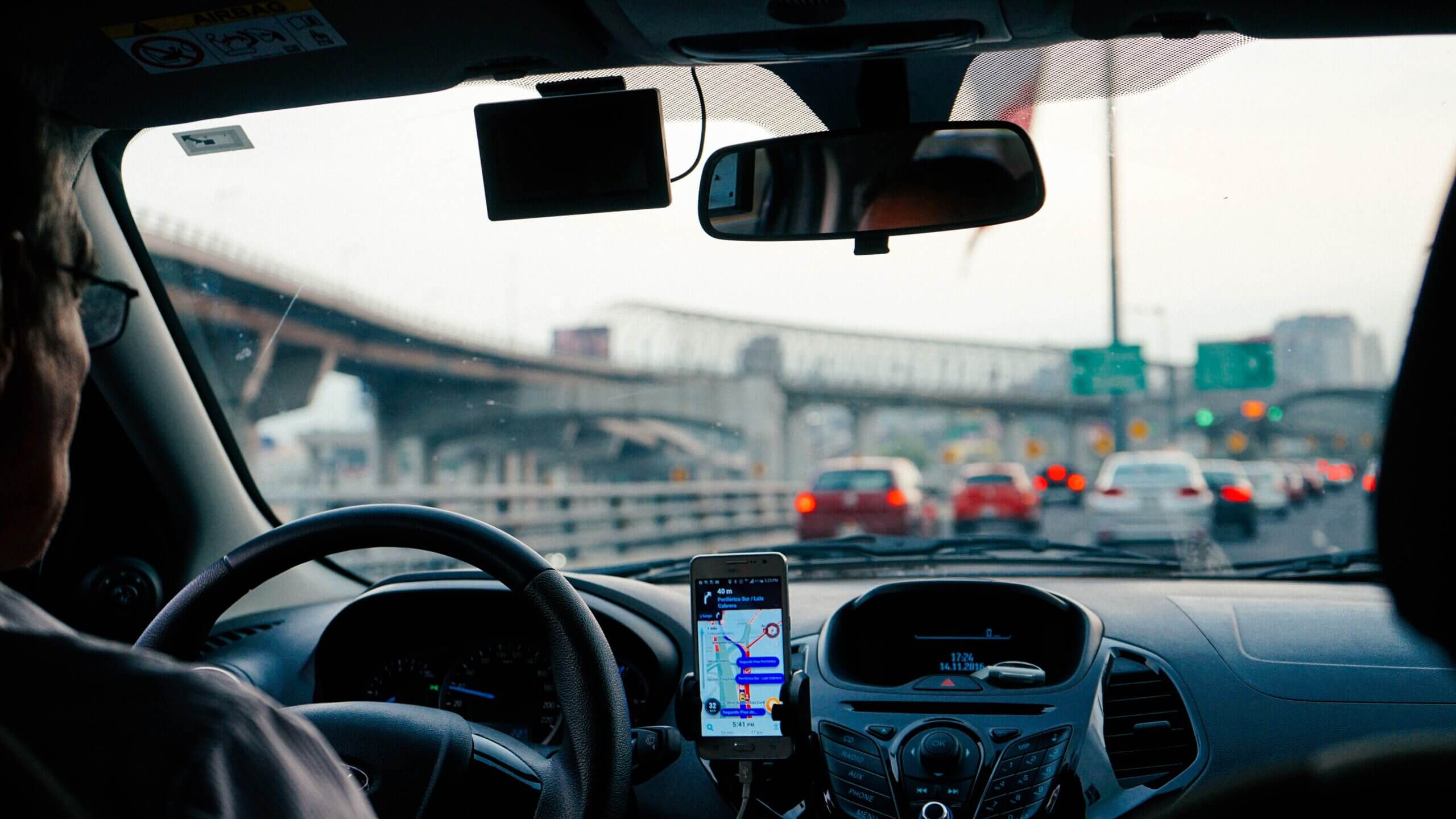
Dash camera footage in a DC car accident can make or break your case. As a plaintiff in a car accident, you carry the burden of proof. That means you must convince a jury that it is more likely than not that your version of events is true. In some instances, the property damage tells the story. For example, in a rear-end collision, the damage to your rear and to the front of the adverse driver’s car shows who is at fault. While you may still have trouble proving damages, liability should be more straightforward. However, there are plenty of accident concepts that can be trickier. For example, in most side-impact collisions, the property damage does not tell the full story. In these cases, we rely on two key distinguishing factors. The first is an independent witness.
This is generally sufficient to shift the balance in our favor and meet the requisite burden of proof. The second way to tip the tides in your favor in an otherwise 50/50 case is with dash camera footage. In fact, dash camera footage is often better than an independent witness. A witness’s credibility can be undermined. Maybe they have a criminal record. Perhaps they were drinking on the day of the accident. They may have poor eyesight, among other issues. Meanwhile, dash camera footage is objective. It allows a jury to see with their own eyes and make a judgment for themselves. This is a unique position for a jury to be in for an accident case, as only about 30% of American drivers utilize dash cameras. Notably, about half of these drivers are rideshare or delivery drivers.
When you are in a car accident and you have dash camera footage, you should take all reasonable efforts to preserve the footage. Many dash cameras operate on a loop-recording system. This means the footage you need may be overwritten to make space for new footage if you do not act in time. Accordingly, you should act as soon as you can to preserve the footage you need. Start by stopping your car and pulling over to exchange information.
As you are waiting for the police to arrive, manually secure the file. If your camera has a “Manual Lock,” “Emergency Record,” or “Protect File” button, press it immediately. This should prevent the current file from being overwritten. Remove the MicroSD card from the dash camera if possible. Then, place the card in a safe spot. Do not reinsert it into the camera to attempt to view or transfer the files yourself.
The best way to preserve the footage at this stage is to hand the original SD card over to your DC car accident lawyer. The chain of evidence in these matters can be important. Especially in 2025, when artificial intelligence and video editing are so prevalent, we must be able to authenticate that the footage is genuine. Of course, if your camera is not a loop-recording system, you must still take reasonable steps to preserve the footage in accordance with the instructions accompanying the camera. If any of the guidance here contradicts the camera’s instructions, go with the instructions. Different cameras may require different steps to preserve the evidence and take the first step towards winning your case.
Dash camera footage is generally admissible in the DC Superior Court for your car accident trial. However, some exceptions may apply. The two main hurdles that may disqualify the video as evidence are (1) relevance and (2) authentication. If the video is irrelevant to a material issue in dispute, then it is not relevant. If a point is irrelevant, it is not worth the court’s resources to consider it, as it has no effect on the case’s outcome. Second, we may face challenges in proving that the video is a true and accurate representation. Of course, if the video has a watermark that says “Sora”. Sora is OpenAI’s generative artificial intelligence model that creates realistic videos. These videos can be so accurate that they can be impossible to distinguish as fake at first glance.
The metadata can also be useful. This can tell us exactly when and where the accident occurred. However, again, we must authenticate this information as legitimate for it to be admissible at trial. Sometimes, the defense counsel will not challenge its legitimacy. But if they do, it can help to have an attorney establish a legitimate chain of custody that will pass any challenges raised by defense counsel. As AI becomes increasingly powerful, it will be more crucial than ever that dash camera footage can be verified as legitimate. Accordingly, we expect that these challenges will come up more and more, as some litigants will surely fraudulently attempt to pass off fake videos as legitimate to save liability in their case.
In any car accident case, we must prove that the adverse driver acted negligently while behind the wheel and that the negligent act is the proximate cause of your injury. We do this by proving all four elements of negligence. But in DC, there is also a contributory negligence defense. This defense holds that if you are even 1% negligent in causing your own injuries, you cannot recover against the defendant. This rule is harsh and irrational. However, it is a legislative decision and is not one that will be successfully argued against at trial. Some argue that dash camera footage is a double-edged sword.
On the one hand, it can show that the other driver was merging into your lane in a side-impact collision and is thus responsible. On the other hand, it may show that you were speeding.
If the speeding is also a proximate cause of the accident, it can bar your right to recovery for the accident under that harsh defense. On the other hand, if you are turning left through an intersection with a green arrow and are T-boned or struck head-on, this may be a “he-said” versus “she-said” trial. They will argue that they had a green light, and you will say that is impossible because you had a green turn arrow. Unfortunately, without an independent witness, this can be a difficult case to win. However, if your dash camera footage shows that you had a green turn arrow when you entered the intersection, you should win on liability outright. Nothing is as convincing to a jury as something they can see with their own two eyes.
By establishing an objective, time-stamped visual record, your dash camera footage can be the most effective way to protect yourself and win your case.
Our DC car accident lawyers have practiced personal injury law in the District for over 70 years. In that time, we have represented over 10,000 clients and successfully recovered over $400 million for our clients. In our practice, we observe several common misconceptions. It is critical to correct these misconceptions before they materially disrupt your case. Of course, the practice of law is complex. Accordingly, it is always best to consult with an attorney as soon as possible. This enables you to avoid missing deadlines and maximize your compensation.
The police report is actually almost always inadmissible at trial. It is generally considered hearsay and rarely admitted, except in specific circumstances. Accordingly, you should certainly not rely on the police report alone to win your case. Moreover, the police often do not even go to an accident scene in Washington, DC, unless there are serious injuries. If it is a mere fender bender, they likely will not come at all. Even if they do come, and an insurance company mistakenly relies on the report as a judge never would, police reports can be wrong. At best, officers writing the reports rely on statements they hear at the accident scene. Then, they will hopefully draft a narrative based on the information they gather. But again, no jury should ever see a police report.
Perhaps the only way it would be applicable at trial is to refresh a witness’s memory, or to recount a witness statement from a witness whom the court cannot find and serve with a subpoena. Moreover, a police officer is unlikely to be an accident reconstruction expert. While they may have expertise in some fields, it is not in motor vehicle accidents. But this is not to say that police reports have zero value. Attorneys will use police reports to discover information on the other driver, such as their legal name, address, and car insurance information. This is particularly useful in accidents where you are too hurt to exchange information on your own.
Believing a dash camera may be used against you is a common misconception, though it does have some truth to it. Ultimately, the benefits of having a dash camera far outweigh the risks. Video evidence can prove that you were driving safely, that another driver violated their legal duty to drive safely, or that a pedestrian stepped into traffic unexpectedly, leaving you no time to stop. Moreover, in instances where the defendant makes false statements blaming you and countersues, video evidence can protect you by dispelling any falsities. Clearly, a dash camera provides countless benefits. But on the question of whether it can hurt your case, the answer is that it can. If your camera does capture something unfavorable, your attorney will determine whether we must disclose it.
If it does hurt your case and we must disclose it, there may be ethical steps to mitigate the harm it does to your case. But in most cases, the footage helps more than it hurts, and having it available strengthens your ability to negotiate or litigate effectively.
The short answer to this misconception is that it can happen. However, if it does happen, and the adverse driver deletes the video footage, we can use this against them. However, to do so, you must act quickly as a plaintiff and retain an attorney as soon as possible after an accident. The reason is that the sooner our firm sends the defendant a spoliation of evidence letter, the better chance that the defendant receives it before they delete the footage. Additionally, we may be able to recover the deleted footage. Although, this can be expensive. We may have to hire an expert to meticulously inspect and recover the footage while maintaining a clean record of evidence that can be authenticated at trial. Thus, it is not as simple as recovering a recently deleted video or sending it to just any tech shop.
Accordingly, while the other driver’s dash camera footage may disappear, there are effective steps you can take to use it against the defendant.
After a car accident, one of the most compelling pieces of evidence is video footage. This is true whether it is from a dash camera, a traffic camera, or a bystander’s phone that catches it at just the right moment. This crucial evidence is the difference between a 50/50 case of word-versus-word and a successful recovery. Our law firm has decades of experience successfully using visual and physical evidence to build persuasive cases on behalf of clients. In most cases, we can settle the case. When the insurance company does not make an enticing settlement offer, it is because it believes it has a shot at trial based on the facts of the case. They understand that it is a matter of which party is more credible. Video footage removes that question and replaces it with clear, unfiltered information.
Dash footage is also useful when the adverse driver flees the scene. While you may be in a daze after an accident and thus unable to promptly pull out your phone to snap a photo of the driver’s license plate, your dash camera should capture it all. While this does not necessarily tell us who is driving the car, it can tell us who owns the car and what insurance is available—all thanks to dash camera footage. Our legal team understands how to preserve, authenticate, and present video footage in accordance with DC law and evidentiary rules. This technical precision allows your video evidence to be admissible and presented to a jury when it matters most.
Call our office today for a free case consultation at (202) 331-7227.




Copyright © 2026 Gelb & Gelb, P.C. All rights reserved.