
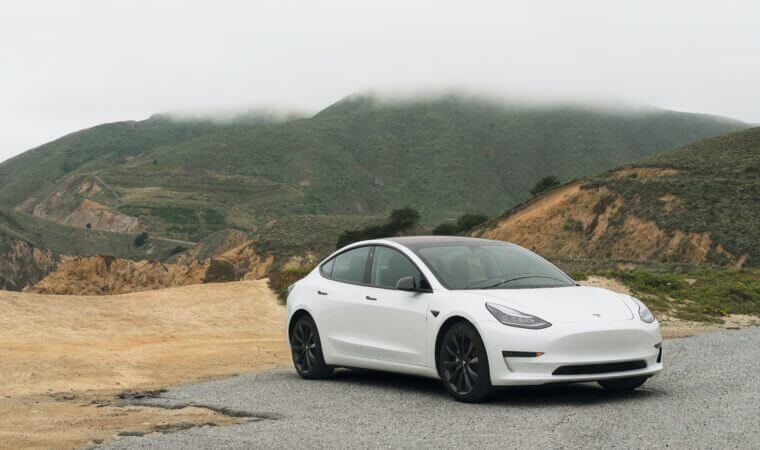
The United States, and eventually humans around the globe, may eventually face the prospect of autonomous vehicles becoming the norm. However, in 2025, especially in Maryland, Washington, D.C., and most of the United States, that reality has yet to take shape. Currently, in 2025, we are in an awkward transition phase where semi-autonomous vehicles are on the road, none of which are yet ready to be fully autonomous. Back in 2019, George McGee was behind the wheel of his Model S, set to Autopilot, when it ran a stop sign and hit a man’s car. Even at the time, Tesla lauded its own system as being able to steer, brake, and accelerate on its own. Despite Autopilot being fully engaged, the Tesla ran through the stop sign and struck a parked SUV.
If you watch the dash camera footage, you can see a flashing yellow light, and the accident occurs at night. This combination of factors surely confused the Tesla. Unfortunately, that mistake cost lives.
Background of the Tesla Crash
- Date: April 2019
- Location: Key Largo, Florida
- Vehicle: Tesla Model S with Autopilot engaged
- Circumstances: Driver distracted by dropped phone; Tesla failed to stop at the intersection with Autopilot engaged.
- Result: Fatal crash involving a parked Chevrolet Tahoe; one death, one severe injury.
The crash killed 22-year-old Naibel Benavides Leon, who had been standing outside the parked SUV, and seriously injured her companion, Dillon Angulo.
While the accident occurred in Florida, meaning Florida state law governs the case, this trial is taking place in federal court. Moreover, many of the principles found in this case can be applied to Maryland cases, DC cases, or practically anywhere in the country. At the accident scene itself, the driver, George, admitted to looking down because he dropped his phone. This is possibly why he initially engaged Autopilot. And while the Autopilot system is said to have been engaged prior to approaching the stop sign, it failed in its most important duty of coming to a full stop at a stop sign and avoiding a collision.
Why the Plaintiffs Turned Their Focus to Tesla
The plaintiffs in this case would rightly argue that Mr. McGee still shares responsibility in this case. Tesla has always claimed to this point, and certainly as of 2019, that drivers should maintain focus on the road despite offering their Autopilot software. However, George McGee has already settled his case with the plaintiffs. While the settlement amount has not been disclosed, it is likely to have reached the maximum of George’s insurance policy limits. More likely than not, the policy limits did not fully compensate the two accident victims, plus family members, for their respective wrongful death claims. Thus, the claim against Tesla makes sense. The plaintiffs in this case are not alone in suing Tesla for the failures of their autopilot system. But what legal claims are available against Tesla?
Legal Claims Against Tesla
A few options are available to the plaintiffs against Tesla, Inc. In this lawsuit, the family of Naibel Benavides Leon is pursuing a wrongful death claim, and Dillon Angulo is pursuing a personal injury claim against Tesla. While the negligent driver has already settled his claim out of court, Tesla is jointly and severally liable. This means each party is independently liable for the full extent of the injuries stemming from the tortious act. So, a plaintiff can collect the full value of a claim from either defendant, the driver or Tesla. This is the law of indivisible injury. In theory, Tesla could then seek contribution from the driver, but that is unlikely given the context.
Below, we provide an overview of the possible theories of liability that the plaintiffs may consider. Naturally, some arguments are more compelling than others. Nonetheless, these seem to provide the plaintiffs the best chance to recover the compensation they deserve from the defendants.
Defective Design
In evaluating a defective design claim, you should note that perfection is not the rule. While it can always be the aim, a design that falls short of perfection is not necessarily defective. In general, it is a question of appropriate balance. So, if the defective condition is unreasonably dangerous, then you may have a viable design defect claim. Lastly, before continuing on to the three tests we can use in a design defect case, understand that these cases can be very expensive to litigate. This is especially true when going against the likes of Tesla. Expert witnesses are almost always necessary in these trials, breaking down complex engineering problems.
- Consumer Expectations Test: Under the consumer-expectations test, a product is defective in design when it is “more dangerous than an ordinary consumer would expect when used in an intended or reasonably foreseeable manner.” In a case against Tesla, what an ordinary consumer would expect depends on the marketing that Tesla puts out and the claims they make. This test could be effective against Tesla, depending on the instructions available at the time.
- Risk/Utility Test: Many products cannot possibly be made entirely safe, including autonomous vehicles. So the question becomes, does the utility of a foreseeable mistake by Tesla outweigh the risk of the occasional accident? This question will surely be litigated in future trials.
- Compositing Test: Even if a product meets ordinary consumer expectations, it can still be considered defectively designed if a jury finds that it presents excessive preventable danger. This means the risk of harm from the design outweighs its benefits. In a case against Tesla, this test could apply if the jury believes the dangers of Autopilot could have been avoided and were not justified by its intended utility.
Failure to Warn and Inadequate Instructions
A manufacturer has certain informational obligations to users and consumers of its products. Thus, a product is reasonably safe only if it carries sufficient information to permit consumers to use it with reasonable safety. From a manufacturer’s perspective, it is usually less costly to warn of a danger than to improve quality assurance or to design a product without the danger. However, they must be careful not to create “warning pollution” with too many warnings. From a plaintiff’s perspective, this is an easier case to pursue than a defective design case. Of course, a product supplier, or in this case Tesla, does not need to put out a warning for every possible part of their cars.
Generally, if there is a hidden material risk, the seller must put out a warning that is designed to reasonably catch the attention of the consumer, be comprehensible, give a fair indication of specific risks involved, and be of an intensity justified by the magnitude of the risk. Meanwhile, in the case here, Elon Musk has put out enough future promises to arguably confuse Tesla operators into thinking they can allow the Tesla to drive on its own. Of course, this does conflict with some warnings inside the car that instruct drivers to continue paying attention to the road.
Tesla’s Defense
Tesla has several defenses available to it, of varying degrees of efficacy. In our view, the most compelling option for Tesla is to attack causation. In any negligence claim, causation is among the four elements that a plaintiff must prove. While the burden of proof rests with the plaintiff, the defense made every effort to dissuade a jury from believing the evidence put forth by the plaintiffs. Tesla has a head start in this case because the driver appears to have already taken some responsibility. Thus, Tesla should then argue that the driver is fully responsible for 100% of the injury, and Tesla shares 0% of the responsibility.
Causation: Driver Error
According to McGee’s own statement to police, he became distracted after dropping his cell phone and looked down while driving. During that moment of inattention, he failed to notice a stop sign at a T intersection and continued through it at high speed, ultimately crashing into a parked Chevrolet Tahoe. Indubitably, that is a proximate cause of damages. In Tesla’s arguments, they could emphasize that McGee actually pressed down the accelerator. When that happens, there is nothing any autonomous vehicle can do to stop, regardless of its advertisements or potential warning defects.
The burden of proof rests with the plaintiff to prove that it was reasonably foreseeable that the breach of the duty owed would cause the damages. This foreseeability requirement is a critical element of negligence and product liability law. It ensures that Tesla is only held liable for harms that a reasonable person or a reasonable company could have anticipated. Here, the plaintiffs must prove that it was reasonably foreseeable that a driver might overrely on the autonomous driving system or misunderstand its abilities. If the plaintiff can then prove that this reliance led to the crash that killed one and injured another, then the causation argument is met.
Of course, Tesla could argue that its on-screen prompts, user manuals, and public statements make it unreasonable for a driver to rely on its system completely. The company could argue that any misunderstanding about the system’s capabilities is unreasonable in light of the warnings provided.
Proper Warnings and Disclaimers
Tesla could argue that it took proper steps to warn consumers about the limitations of its Autopilot system. From the company’s perspective, the responsibility for safe operation remains with the human driver, and Tesla asserts that it has never claimed otherwise. Of course, the messaging on this topic has been confusing at best. The confusion in that messaging may be enough for a plaintiff’s attorney to prove, by a preponderance of the evidence, that it was reasonably foreseeable for a driver to rely on Tesla’s autonomous system. Tesla could point to a variety of channels through which it provides warnings to users. These include the vehicle’s user manual, in-car prompts, terms of service, and even on-screen alerts that appear while Autopilot is in use. In each of these, Tesla could emphasize that the system is designed to assist, not replace, the driver.
And this is true. Nonetheless, the messaging has been unclear as Elon Musk has said things like “Autopilot is 10 times safer than a normal vehicle.” While this is not an explicit statement that one should rely on the software, it may be enough to confuse drivers and supersede any warnings they see in the car, knowing that this message comes from Tesla’s CEO.
The Result
A federal jury in Miami found Tesla partially responsible for a 2019 crash that killed 22-year-old Naibel Benavides Leon and severely injured Dillon Angulo. The jury awarded a total of $329 million in damages, with Tesla ordered to pay $42.6 million in compensatory damages and the full $200 million in punitive damages, bringing its total liability to $242.6 million. The reason Tesla does not have to pay the full $329 million in damages is that the jury only found Tesla to be one-third at fault. And of course, the driver, George McGee, was not a named defendant in this trial, having already settled out of court. More than likely, the plaintiffs have already signed a release of liability contract in exchange for the policy limits with George’s auto insurance liability carrier.
This is a rare loss for Tesla over its autonomous technology and may influence future litigation involving semi-autonomous systems. Nonetheless, Tesla will likely appeal this verdict, pursuing a ruling of remittitur from the appellate level. Remittitur is ordered when a court finds that the punitive damages are excessive or not supported by the evidence. It may order a reduction in the award rather than grant a new trial.
Review of Punitive Damages
In the U.S. Supreme Court case BMW of North America, Inc. v. Gore, the plaintiff bought a 5-series BMW that was, unbeknownst to the plaintiff, refurbished by BMW per their policy of doing so and not telling dealers when less than 3% of the total car value was required for repairs. In that case, compensatory damages were low, and punitive damages were at a 500:1 ratio. With that case, the Court overturned a $2 million punitive damages award as “grossly excessive” in relation to a $4,000 compensatory award. In that case, the Supreme Court gave us three guideposts for whether a punitive damages award violates the Due Process Clause of the Fourteenth Amendment:
- The degree of reprehensibility of the defendant’s conduct
- The ratio between punitive and compensatory damages
- A comparison to civil penalties in similar cases
With the Tesla case, the punitive award of $200 million is nearly five times the $42.6 million in compensatory damages the company was ordered to pay. While that ratio is not unprecedented, it could be challenged on Gore grounds. Of course, the total compensatory damages were $129 million. It is just that Tesla is only liable for one-third of that amount.
What This Means for Future Autopilot Litigation
The size of the punitive damages award, even if reduced on appeal, sends a strong message about Americans’ attitudes toward corporate accountability. Of course, punitive damages are not available in every state. Moreover, the standard that a plaintiff must reach to recover punitive damages varies from state to state. Additionally, the value of a life, peculiarly enough, also varies widely from state to state. Florida is known to be a more generous state for jury verdicts.
To recover punitive damages, there must first be an award of compensatory damages, according to the New York Appellate case McDougald v. Garber. But an even more on-point case is Grimshaw v. Ford Motor Co. The punitive damages awarded against Tesla in this case draw strong parallels to one of the most famous product liability verdicts in U.S. history: Grimshaw v. Ford Motor Co. In that 1978 case, a California jury awarded $125 million in punitive damages (later reduced to $3.5 million) against Ford for knowingly selling the Pinto with a dangerously placed gas tank that was prone to exploding in rear-end collisions. Both cases rest on a common legal principle: foreseeable misuse combined with corporate indifference to safety can support punitive damages. However, we may also see remittitur for Tesla as Ford got 47 years ago.
In both cases, the punitive damages award is not so much about the damages sustained by the victims (that is what the compensatory damages are for) but instead about sending a message to the corporation.