
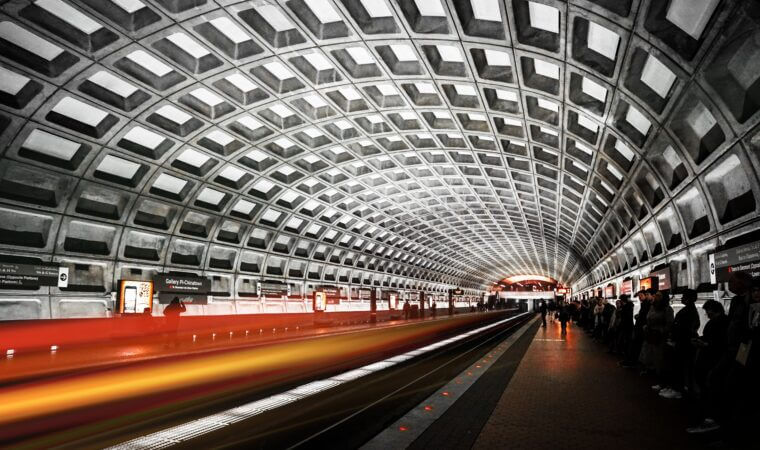
On February 11, 2026, a car fell onto Orange Line Metro tracks near Dunn Loring station in Fairfax County. The vehicle dropped from the westbound HOT lanes on Interstate 66 and landed on the tracks below. Rail service between West Falls Church and Vienna temporarily halted. This car falls Metro tracks event echoed a nearly identical crash from 1989, when a vehicle dropped onto the same tracks from an I-66 overpass.
Fortunately, this 2026 incident caused no reported passenger injuries. But it is a sharp reminder that Metro accidents can happen anywhere along the system. Riders, workers, and bystanders throughout DC and Maryland can suffer serious injuries when accidents occur. If you or a loved one suffers an injury in a WMATA accident in Washington, DC or Maryland, the legal process for seeking compensation differs significantly from a standard car accident claim. Here is what you need to know.
WMATA Is a Government Entity and Special Rules Apply
The Washington Metropolitan Area Transit Authority is an interstate compact agency. The District of Columbia, Maryland, and Virginia jointly fund it. Because WMATA operates as a government entity, different legal rules apply to personal injury claims against it. Private companies face very different standards.
Special procedural requirements govern WMATA claims. The notice deadlines are far shorter than the three-year statute of limitations that applies to most personal injury cases in DC and Maryland. Missing these deadlines can permanently destroy your ability to recover any compensation. WMATA also self-insures, paying claims from its own funds rather than through a private insurance carrier. The agency aggressively defends claims and works to minimize payouts. Experienced legal representation is essential from the first day of the claims process.
The Six-Month Notice Deadline for DC WMATA Accidents
If you suffer an injury in a WMATA Metro accident in Washington, DC, you must file a written notice of injury with the DC Office of Risk Management within six months of the accident under DC Code Section 12-309. This notice must describe the incident, your injuries, and the damages you seek.
Missing this six-month deadline can permanently bar your claim. Courts strictly enforce this rule, regardless of how severe your injuries are or how clear WMATA’s negligence may be. Very limited exceptions exist.
After you file the notice, WMATA typically has 30 to 60 days to investigate and respond. If the agency denies the claim, you may file a lawsuit. For DC accidents, you have three years from the accident date to file the actual lawsuit against WMATA.
The One-Year Notice Deadline for Maryland WMATA Accidents
For WMATA accidents that occur in Maryland, a different notice deadline applies. You have one year from the accident date to provide written notice of your injury claim to the Maryland state government. You must then file the lawsuit within three years of the accident.
While one year is longer than six months, it is still shorter than the general three-year personal injury statute of limitations in Maryland under Maryland Code, Courts and Judicial Proceedings Section 5-101. Many injured riders assume they have the full three years. They miss the shorter notice deadline and lose their right to sue.
Car Falls Metro Tracks: Types of WMATA Accidents That Lead to Claims
WMATA accident claims are not limited to train collisions or dramatic derailments. When a car falls Metro tracks and injures bystanders or riders, that can also form the basis of a claim depending on the circumstances.
Valid claims arise from a wide range of incidents. These include sudden stops or unexpected train movements that cause passengers to fall inside cars. They also include slip and fall accidents on station platforms or escalators, elevator accidents at Metro stations, and Metrobus collisions involving passengers or pedestrians. Accidents caused by inadequate warning systems or poorly maintained infrastructure also qualify.
In any of these situations, you must show that WMATA or one of its employees acted negligently and that the negligence directly caused your injury.
Common Injuries in Car Falls Metro Tracks and WMATA Accidents
Metro accidents cause a wide range of serious injuries. Traumatic brain injuries often result from sudden stops, falls, or collisions inside train cars. Spinal cord injuries can occur when passengers are thrown against seats, doors, or other riders. Broken bones, torn ligaments, and soft tissue injuries are also common.
Slip and fall accidents on wet or poorly maintained platforms cause knee injuries, hip fractures, and head injuries. Escalator and elevator malfunctions have caused amputations and crush injuries. Burns and respiratory injuries can result from fires or smoke exposure in stations or tunnels.
Many of these injuries do not show obvious symptoms right away. Traumatic brain injuries and internal injuries may not produce noticeable signs until hours or days after the accident. Seeking medical attention immediately after any Metro accident matters, even if you feel fine.
Injuries sustained on Metro property often require extended treatment. Physical therapy, specialist consultations, and follow-up imaging can create medical bills that accumulate over months or years. Long-term disability, reduced earning capacity, and ongoing pain and suffering are compensable in many cases. An experienced WMATA accident attorney can identify every category of damages that applies to your situation and fight to maximize your recovery.
DC’s Contributory Negligence Rule and WMATA Claims
Both Washington, DC and Maryland follow a contributory negligence standard. This is one of the strictest fault rules in the country. Under this rule, even one percent of fault can completely bar you from recovering any compensation.
In WMATA cases, the agency’s claims adjusters and defense attorneys actively look for ways to assign partial responsibility to the injured party. They may argue that the rider was standing in an unsafe location, was not holding a handrail, or was distracted at the time of the incident. Experienced legal representation from the outset is critical to preventing fault-shifting and protecting your right to full compensation.
Car Falls Metro Tracks: Evidence You Must Preserve Quickly
Evidence in WMATA accident cases disappears quickly. WMATA controls station surveillance footage, train event recorder data, maintenance logs, and incident reports. Without prompt legal action to send evidence preservation demands, WMATA can overwrite or delete critical evidence.
If you suffer an injury in a Metro accident, report the incident to WMATA station personnel right away and request a written incident report. Take photographs of the scene, the platform, and any conditions that contributed to the accident. Collect names and contact information for any witnesses present. Seek medical attention immediately, even if you believe your injuries are minor.
After you retain an attorney, they can send a litigation hold letter to WMATA within days. This letter puts WMATA on notice that it must preserve all relevant records. Acting fast is essential.
What Compensation May Be Available in a WMATA Accident Claim?
If you suffer an injury in a WMATA Metro accident in Washington, DC or Maryland, you may recover compensation for medical expenses, including emergency treatment, surgery, hospitalization, and future care needs. You may also recover lost wages, loss of future earning capacity, pain and suffering, and emotional distress.
In cases involving wrongful death, surviving family members in DC may pursue a claim under DC Code Section 16-2701 within two years of the date of death. In Maryland, wrongful death claims fall under Maryland Code, Courts and Judicial Proceedings Section 3-904. Families must generally file within three years of the date of death.
Why You Need a WMATA Accident Lawyer
WMATA accident claims are among the most complex personal injury cases in the DC metro area. Strict notice deadlines, government immunity rules, contributory negligence defenses, and WMATA’s aggressive posture make these cases difficult to navigate alone. Injured riders who handle these claims without an attorney rarely recover fair compensation.
An experienced WMATA accident lawyer can identify all applicable deadlines immediately, send evidence preservation demands to protect critical records, negotiate with WMATA’s claims adjusters from a position of strength, and take the case to trial if the agency refuses to offer fair value.
Time matters in these cases. The sooner you contact an attorney, the better your chances of preserving evidence and meeting every required deadline. Many victims wait too long, believing they can handle early interactions with WMATA on their own. Anything you say to WMATA’s representatives can minimize your claim. Having an attorney handle all communications from the start protects your interests.
What to Do Immediately After a WMATA Metro Accident
The steps you take in the minutes and hours after a WMATA accident can significantly affect your ability to recover compensation. First, move to a safe area if you can do so without worsening your injuries. Call 911 or ask station personnel to call for emergency assistance.
Report the incident to WMATA station personnel and insist that station workers create an official incident report. Get the name and badge number of every WMATA employee who responds. This documentation creates an official record that WMATA cannot easily deny later.
Photograph everything you can. Document the platform surface, escalator steps, any warning signs or their absence, debris, wet floors, broken handrails, and any other conditions that contributed to your injury. Take photos of your injuries as well.
If bystanders witnessed the accident, ask for their names and phone numbers right away. Witnesses move on quickly in busy Metro stations. Go to an emergency room or urgent care facility that same day, even if you feel relatively fine. The medical record from the day of the accident is one of the most important pieces of evidence in your case. It establishes a direct connection between the accident and your injuries before any gap in time can work against you.
Contact a DC and Maryland WMATA Accident Lawyer at Gelb & Gelb, P.C.
If you or a loved one suffered an injury in a WMATA Metro or Metrobus accident in Washington, DC or Maryland, do not wait to get legal help. The notice deadlines in these cases are strict, and missing them can permanently end your claim.
Gelb & Gelb, P.C. has represented personal injury victims in the DC area for over 70 years and has recovered more than $400 million for clients. We handle all cases on a contingency fee basis, meaning you pay nothing unless we recover compensation for you. Call us at (202) 331-7227 or contact us online for a free consultation. You can also learn more about your rights after a DC Metro accident or a DC car accident.