DC Train Accident Lawyer
Home › DC Personal Injury Lawyer › DC Train Accident Lawyer
Reviewed & authored by Roger K. Gelb & Brian A. Gelb | DC Car Accident Attorneys, Gelb & Gelb, P.C.
>
Licensed in Maryland & Washington, D.C. | 70+ years combined experience | $400M+ recovered for clients
Last updated: March 2026 | This page is reviewed quarterly to ensure legal accuracy.
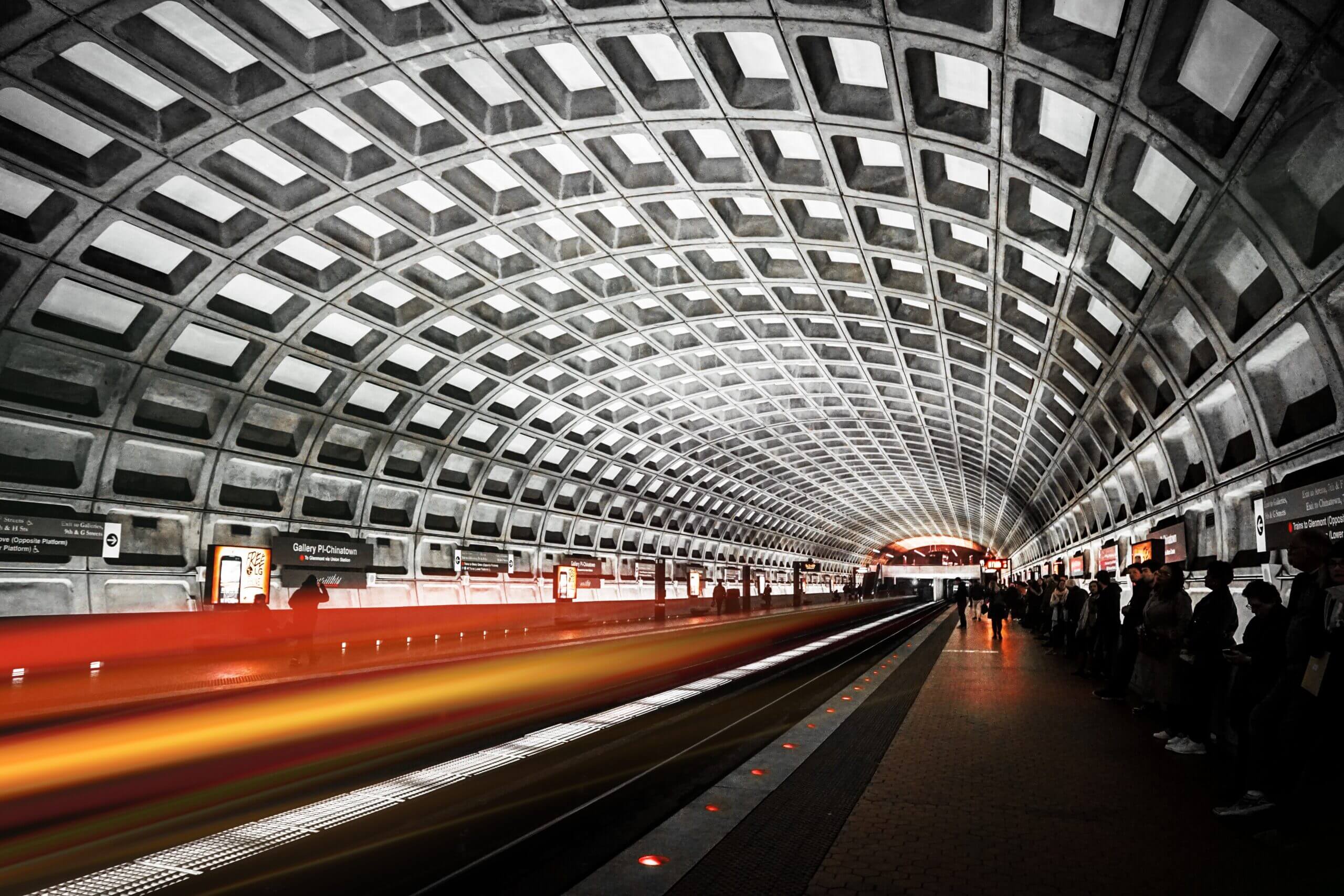
Every year, thousands of people ride Amtrak trains through Washington, DC and use the DC Metro to get to work, school, and appointments. When a train accident occurs, the injuries can be catastrophic. Collisions, derailments, and sudden stops can cause traumatic brain injuries, spinal cord injuries, broken bones, and wrongful death. If you or a loved one suffered injuries in a DC train accident, contact an experienced DC train accident lawyer. These cases involve complex legal rules governing claims against rail operators.
Gelb & Gelb, P.C. has represented personal injury victims in Washington, DC for over 70 years and has recovered more than $400 million for clients. Our attorneys handle Amtrak, DC Metro, and WMATA accident claims, as well as train-vehicle collision cases across the District, Maryland, and Virginia. Contact us today for a free consultation at (202) 331-7227.
Types of Train Accidents in Washington, DC
Train accidents in the DC area take many forms. Some of the most common types of cases our attorneys handle include:
Train derailments occur when a train leaves its tracks due to equipment failure, track defects, excessive speed, or human error. Derailments can injure passengers and crew. Multiple parties may be liable, including the rail operator, track maintenance contractors, and equipment manufacturers.
Train-on-train collisions occur when two trains traveling on the same line collide. One deadly example was the June 2009 Red Line crash near Fort Totten Station. Two WMATA Metro trains collided, killing nine people and injuring more than fifty, according to the National Transportation Safety Board.
Train-vehicle crashes occur at grade crossings when a train strikes a car, truck, or other motor vehicle. The weight disparity between trains and passenger vehicles makes these collisions often fatal.
Train-pedestrian accidents occur when a train strikes a person on or near the tracks. These cases often involve questions about whether adequate warning systems, barriers, and signage were in place.
Passenger injuries on board occur when sudden stops, excessive speed, or falls inside train cars hurt passengers. As a common carrier, Amtrak and WMATA owe passengers a heightened duty of care.
Suing Amtrak for a Train Accident in DC
Amtrak is the primary intercity passenger rail service in the United States and maintains its headquarters at Union Station in Washington, DC. Although Congress created Amtrak and it receives federal funding, it is not a government agency. It is a private corporation, and different rules govern claims against Amtrak than those that apply to government entities.
For passenger injury claims, the statute of limitations is generally two years from the accident date. For employee injury claims governed by the Federal Employers Liability Act (FELA), the deadline is three years. These deadlines differ from DC’s general three-year personal injury statute of limitations. Contact an attorney right away after an Amtrak accident to file your claim on time.
Under the Amtrak Reform and Accountability Act, Amtrak’s total liability for any single accident tops out at $295 million. All victims share this cap. In accidents with many injured passengers, this cap can significantly limit individual recoveries. Acting quickly and securing experienced legal representation is critical.
To prove a negligence claim against Amtrak, you must show four things. First, Amtrak owed you a duty of care. Second, Amtrak breached that duty through failures such as inadequate equipment maintenance, improper crew training, or violations of Federal Railroad Administration safety regulations. Third, the breach caused the accident. Fourth, you suffered damages as a result.
Suing WMATA for a DC Metro Accident
The Washington Metropolitan Area Transit Authority, known as WMATA, operates the DC Metro rail system and Metrobus. WMATA is an interstate compact agency jointly funded by the District of Columbia, Maryland, and Virginia. Because WMATA is a government entity, strict procedural requirements apply to injury claims against it. These rules do not apply to private party claims.
The most important deadline depends on where the accident occurred. DC accident victims must file a notice of injury with the DC Office of Risk Management within six months under DC Code Section 12-309. If the accident occurred in Maryland, you have one year to provide written notice to the state government. Virginia accidents also require written notice within one year. Missing these deadlines can permanently bar your claim, no matter how severe your injuries are.
Once you file your notice, WMATA has approximately 30 to 60 days to investigate and respond. If WMATA denies your claim, you may proceed with a lawsuit. DC accident victims have three years to file a lawsuit against WMATA.
WMATA is self-insured, meaning it pays claims from its own funds rather than through a traditional insurance company. The agency aggressively defends claims and works to minimize payouts. You need experienced legal representation to navigate this process effectively.
Common Causes of Train Accidents
One or more of the following factors typically cause train accidents in Washington, DC:
Human error by train operators, including speeding, signal violations, distraction, or fatigue, is one of the most frequent causes of serious train accidents. The Federal Railroad Administration governs hours of service regulations that limit how long train operators may work before mandatory rest periods.
Defective brakes, faulty signal systems, worn tracks, and mechanical failures in train cars can cause or contribute to accidents. Federal law requires rail operators to inspect and maintain equipment under 49 CFR Part 213, the federal track safety standards.
Track defects including broken rails, improper track geometry, and unmaintained switches have caused derailments across the country. The entity responsible for track maintenance may share liability with the rail operator.
Inadequate warning systems at grade crossings, including malfunctioning gates, lights, or signals, can contribute to train-vehicle collisions. The Federal Railroad Administration’s grade crossing safety program establishes standards for crossing warnings that operators must meet.
Who Can Be Held Liable in a DC Train Accident?
Train accident cases in Washington, DC often involve multiple potentially liable parties. Depending on the facts of your case, the following may bear responsibility:
The rail operator, whether Amtrak or WMATA, may be liable for negligent operation, inadequate maintenance, improper crew training, or violations of federal or local safety regulations.
Track maintenance contractors may be liable if a rail, switch, or infrastructure defect contributed to the accident.
Equipment manufacturers may face product liability if a defective braking system, wheel assembly, or signal device contributed to the crash.
Government entities responsible for grade crossings or nearby road design may also share liability.
Injuries in Train Accidents
Because of the size and force involved in train accidents, victims frequently suffer severe and life-altering injuries. A DC train accident lawyer at Gelb & Gelb, P.C. commonly handles cases involving traumatic brain injuries, spinal cord injuries and paralysis, broken bones and fractures, internal organ damage, lacerations and burns, and in the most serious cases, wrongful death. Many require extensive medical treatment and long-term rehabilitation. These injuries can permanently affect a victim’s ability to work and enjoy daily life.
What Compensation May Be Available After a DC Train Accident?
Victims of train accidents in Washington, DC may be able to recover compensation for a broad range of losses. These include medical expenses such as emergency treatment, surgery, hospitalization, and future care needs. You may also recover lost wages, loss of future earning capacity, pain and suffering, emotional distress, and loss of enjoyment of life. DC does not cap damages in personal injury cases against private parties such as Amtrak. In cases involving WMATA or other government entities, different rules may apply.
In cases involving wrongful death, surviving family members may be able to pursue a wrongful death claim under DC Code Section 16-2701. Families must generally file wrongful death claims in DC within two years of the date of death.
Why Deadlines Matter in DC Train Accident Cases
Train accident cases involve some of the most complex and unforgiving deadlines in personal injury law. Claims against WMATA require a written notice of claim within six months if the accident occurred in DC. Passenger injury claims against Amtrak generally have a two-year deadline. You must also act quickly to preserve evidence including train event recorder data, maintenance logs, crew records, and surveillance footage before operators overwrite or destroy it.
When you hire a DC train accident lawyer at Gelb & Gelb, P.C., we act immediately to send evidence preservation letters, investigate the cause of the accident, and protect your legal rights before critical deadlines pass.
Contact a DC Train Accident Lawyer at Gelb & Gelb, P.C.
If you or a loved one suffered injuries in a train accident in Washington, DC, do not wait to get legal help. The deadlines in these cases are strict, and early action is critical to preserving evidence and protecting your rights. Gelb & Gelb, P.C. handles all cases on a contingency fee basis, meaning you pay nothing unless we recover compensation for you.
Call us at (202) 331-7227 or contact us online for a free consultation. You can also learn more about your rights after a DC car accident or a DC pedestrian accident.












 N/a
N/a